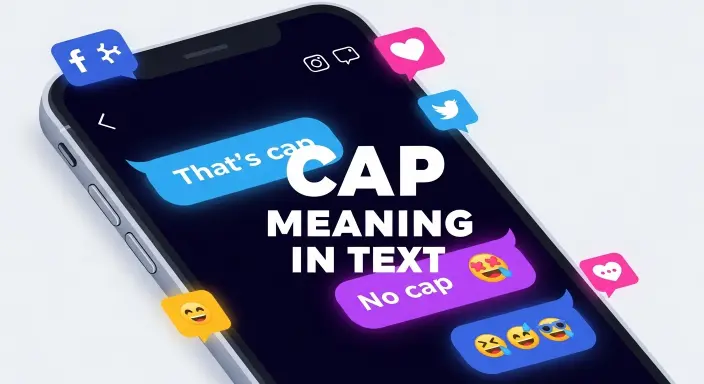
In today’s fast digital world, people use short words and slang while texting. One popular term you may see is cap. It is used in chats, social media, and even in gaming. Many people, especially younger users, use this word daily.
But what does cap really mean? If you see someone say That’s cap or No cap, it can be confusing at first.
Understanding this term is important because it helps you follow conversations easily and avoid misunderstandings. It also makes your communication feel more natural and modern.
If you are chatting with friends, posting online, or reading comments, knowing the meaning of cap can help you stay updated with current slang trends. In this article, you will learn everything about cap in a simple and clear way.
Definition & Meaning
The word cap in text slang means a lie or something that is not true.
- Cap = Lie / Fake statement
- No cap = Truth / No lie / Being honest
Simple Examples
- I just ran 10 miles without stopping.
Reply: That’s cap. (This means: I don’t believe you.) - This is the best food I’ve ever had, no cap.
(This means: I am telling the truth.)
Why People Use It
People use cap because it is:
- Short and quick
- Trendy
- Easy to understand in casual chats
Dialogue Example
Friend 1: I scored 100% without studying.
Friend 2: Bro, that’s cap.
Friend 1: No cap, I really did!
Here, cap shows doubt, and no cap shows honesty.
Background & History
The slang word cap comes from African American Vernacular English (AAVE). It became popular in the United States many years ago but gained massive attention through music and social media.
In the past, capping meant bragging or exaggerating. Over time, the meaning changed slightly and became more focused on lying or saying something false.
Rise in Popularity
- Hip-hop songs helped spread the term
- Influencers and streamers started using it
- Platforms like TikTok and Twitter made it viral
By the late 2010s and early 2020s, cap became a global slang word. Now, people from different countries use it in everyday texting.
Modern Usage
Today, cap is widely used in:
- Online chats
- Gaming communities
- Social media posts
It is now part of internet culture and continues to grow in popularity.
Usage in Various Contexts
1. Texting
Example:
Stop capping! (Stop lying)
2. Social Media
People use it in comments:
- This story is cap.
- No cap, this is amazing.
3. Gaming
Gamers use it when someone exaggerates:
Player 1: I never lose matches.
Player 2: Cap.
4. Casual Conversations
Even in real life:
Friend: I woke up at 5 AM today.
You: Cap!
Dialogue Examples
A: I met a celebrity yesterday.
B: That’s cap.
A: No cap, I have proof!
Common Misconceptions & Clarifications
Misconception 1: Cap means hat
Yes, cap normally means a hat, but in slang, it means lie.
Misconception 2: Always rude
Not always. It depends on tone. Among friends, it is usually playful.
Misconception 3: Only for teenagers
While popular among youth, many adults also use it online.
Important Clarification
- Use it only in casual settings
- Avoid using it in serious or formal conversations
Similar Terms & Alternatives
Here are some words similar to cap:
| Term | Meaning |
| Lie | Not true |
| Fake | Not real |
| BS | Nonsense |
| Exaggerating | Stretching truth |
Examples
- That’s fake.
- You’re lying.
- Stop exaggerating.
How to Respond to This Term
Casual Response
Okay, believe what you want.
Funny Response
Yeah, I’m the king too 😂
Confident Response
No cap, I’m serious.
Professional Response
I assure you that is correct.
Dialogue Example
Person: That’s cap.
You: No cap, I can show proof.
Regional or Cultural Differences
Cap started in the U.S., but now it is used worldwide.
Different Regions
- USA: Very common
- UK: Used among youth
- Pakistan/India: Growing popularity
Cultural Impact
Social media has made this slang global. Even non-native English speakers use it in chats.
Comparison with Similar Terms
| Term | Meaning | Tone |
| Cap | Lie | Casual |
| No cap | Truth | Casual |
| Lie | False | Neutral |
| Fake | Not real | Informal |
Usage in Online Communities & Dating Apps
On Social Media
- No cap, this post is fire.
- That’s cap bro.
On Dating Apps
People use it to show honesty:
- I’m here for real, no cap.
Tips
- Use it carefully
- Avoid overuse
- Understand context
Hidden or Offensive Meanings
Cap is usually harmless, but tone matters.
Possible Issues
- Can sound rude if used aggressively
- May offend someone if they feel accused
Example
Stop capping! can feel harsh if not said jokingly.
Suitability for Professional Communication
Cap is not suitable for formal use.
Avoid in:
- Emails
- Job interviews
- Business meetings
Use Instead:
- That is incorrect.
- I disagree with that statement.
FAQs:
1. What does cap mean in slang?
It means a lie or something false.
2. What does no cap mean?
It means you are telling the truth.
3. Is cap rude?
Not always, but it depends on tone.
4. Can I use it in formal writing?
No, it is informal slang.
5. Where is it most used?
Social media, texting, and gaming.
6. Is it used worldwide?
Yes, especially among young people.
Conclusion:
The slang word Cap is a simple but powerful part of modern communication. It means a lie, while no cap means truth. This term is widely used in texting, social media, and casual conversations.
Understanding cap helps you stay updated with current trends and communicate better with others, especially online. However, it is important to use it in the right context. Avoid using it in formal or professional situations.
By learning slang like cap, you can make your conversations more natural and engaging. Just remember tone and situation matter. Use it wisely, and you will fit right into modern digital communication.

I am Jonathan Parker, creator of Texttak.com, where simple words create real impact. I focus on clear, trendy, and engaging content that connects with today’s audience.