In today’s world, texting and social media are a huge part of our daily lives. We often come across abbreviations that make conversations faster, like LOL, BRB, or IDK. One abbreviation that has gained attention recently is HWR.
You might see it in a text from a friend, in a comment on social media, or even while chatting in a gaming community.
Understanding these shortcuts is not just about staying trendy it helps you communicate clearly and avoid misunderstandings. Misinterpreting such terms can cause confusion or even awkward situations.
In this blog post, we will explore what HWR means, its origins, how it is used in different contexts, and how you can respond to it safely and appropriately. By the end, you’ll feel confident spotting and understanding HWR in everyday conversations.
Definition & Meaning
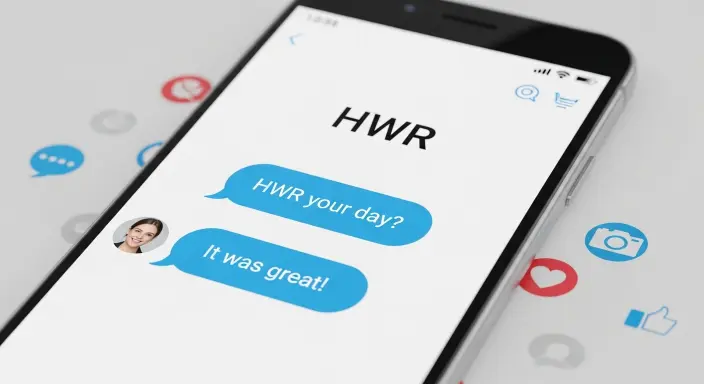
The abbreviation HWR stands for How Was [it/your/your day/etc.]. It is a shorthand way of asking someone about their experience or feelings regarding a specific event or situation.
Example in texting:
- Alex: HWR your trip?
- Sam: It was amazing! Loved the beach.
Here, Alex is simply asking How was your trip? but uses HWR to type less and communicate faster.
Example in social media comments:
- Comment: HWR the movie last night?
- Reply: Loved it! Great storyline and acting.
Notice that HWR is friendly and casual. It is not typically used in professional emails or formal writing. Its usage is mostly in quick messages, chats, or informal posts where brevity is appreciated.
It’s important to recognize that while HWR may seem like a small abbreviation, it keeps conversations flowing quickly, especially in spaces like messaging apps or gaming chats.
Background & History
Abbreviations like HWR emerged with the rise of SMS texting in the early 2000s. Before smartphones, people were limited by character counts, so shortcuts like LOL (laugh out loud), BRB (be right back), and eventually HWR became popular.
The evolution of texting language mirrors how digital communication favors speed and convenience. With smartphones and social media platforms, abbreviations spread faster than ever. Teenagers and young adults often lead the adoption of such terms, which then trickle into wider usage.
HWR has remained relevant because it is intuitive and easy to understand once you know the context. Unlike some slang that fades over time, HWR is likely to continue in informal chat environments because asking how was… is a common conversational starter.
Usage in Various Contexts
HWR can appear in multiple everyday scenarios:
- Texting friends:
- Mia: HWR the party last night?
- Liam: Amazing! The music was fantastic.
- Mia: HWR the party last night?
- Social media posts:
- Instagram comment: HWR your day?
- Reply: Busy but productive!
- Instagram comment: HWR your day?
- Gaming communities:
- Gamer1: HWR the new update?
- Gamer2: Pretty cool. Makes battles more challenging.
- Gamer1: HWR the new update?
- Casual conversation online:
- Friend: HWR the exam?
- You: Not bad. A bit tricky but manageable.
- Friend: HWR the exam?
Key Point: HWR is mainly casual and friendly, not formal.
Common Misconceptions & Clarifications
- Misconception 1: HWR is a typo or random letters.
Clarification: HWR is intentional shorthand for How Was…. - Misconception 2: HWR is always appropriate in professional settings.
Clarification: HWR is casual. Using it in emails or business chat may seem unprofessional. - Misconception 3: HWR has hidden meanings.
Clarification: HWR is straightforward, but tone matters. A sarcastic HWR your weekend? could imply judgment.
Example:
- Text: HWR the meeting?
- Response: Terrible…
- Here, HWR is used normally, but the reply shows a negative tone.
Similar Terms & Alternatives
Some abbreviations or phrases are similar to HWR:
| Term | Meaning | Usage Example |
| HWU | How are you? | HWU today? |
| HWI | How was it? | HWI your exam? |
| HWD | How was dinner? | HWD the dinner party? |
Key Point: Use the one that best fits the context. HWR is broad and flexible, while others are more specific.
How to Respond to This Term
Responses depend on the tone you want to convey:
- Casual:
- Friend: HWR your day?
- You: Pretty good! Watched a movie.
- Friend: HWR your day?
- Funny:
- Friend: HWR the trip?
- You: Survived! My luggage didn’t.
- Friend: HWR the trip?
- Professional (friendly work chat):
- Colleague: HWR the client meeting?
- You: Productive. We outlined the next steps.
- Colleague: HWR the client meeting?
- Privacy-conscious:
- Friend: HWR your weekend?
- You: Good, thanks! Just relaxed at home.
- Friend: HWR your weekend?
Tip: Match your response style to your audience and context.
Regional or Cultural Differences
HWR is mostly English-based. Non-English speakers may not recognize it immediately. However, similar shortcuts exist globally:
- Spanish: ¿Qué tal?
- French: Ça va?
- German: Wie war’s?
Some regions may prefer the full phrase instead of abbreviations. Online communities with international users often include clarifying context to avoid confusion.
Comparison with Similar Terms
| Abbreviation | Meaning | Formality | Example |
| HWR | How was… | Casual | HWR the party? |
| HWU | How are you? | Casual | HWU today? |
| HWI | How was it? | Casual | HWI the test? |
| HWD | How was dinner? | Casual | HWD the dinner? |
Key Takeaway: HWR is versatile for general experiences, while others are more specific.
Usage in Online Communities & Dating Apps
- Tinder/ Bumble: HWR can start conversations casually.
- Example: HWR your day? 😊
- Example: HWR your day? 😊
- Twitter/Reddit: People use HWR in replies or threads to ask about experiences.
- Gaming: Players may ask HWR to check progress or impressions of a new game update.
Tip: Always consider context and tone before using HWR on public platforms.
Hidden or Offensive Meanings
HWR is not inherently offensive, but tone and context matter. Sarcasm or negative comments can make it sound rude:
- Example: HWR your weekend? (said in a judgmental tone)
- Interpretation: Could feel like criticism rather than a friendly check-in.
Rule of thumb: Use HWR positively and consider your audience’s perspective.
Suitability for Professional Communication
HWR is informal, so avoid using it in emails, reports, or client messages. Professional alternatives include:
- How was your meeting?
- How did the project go?
- I hope your day went well.
Using full sentences maintains professional tone and clarity.
FAQs:
- Q: Can HWR be used for anyone?
A: Yes, but it’s best for friends, family, or casual chats. - Q: Is HWR the same as HWU?
A: Not exactly. HWR asks about an experience; HWU asks about someone’s state. - Q: Is HWR inappropriate?
A: Usually no, but tone and context matter. - Q: Can I use HWR in emails?
A: Only in informal internal chats. Avoid in formal emails. - Q: Are there global equivalents?
A: Yes, like ¿Qué tal? in Spanish or Ça va? in French.
Conclusion:
HWR is a friendly and concise way to ask someone about their experiences. It saves time, keeps conversations flowing, and is widely used in texting, social media, and gaming.
While it’s casual, knowing how to respond, recognize context, and use it appropriately ensures smooth communication. Remember, tone and audience matter, and professional alternatives are better for formal settings.
By understanding HWR, you stay connected, clear, and confident in digital conversations.