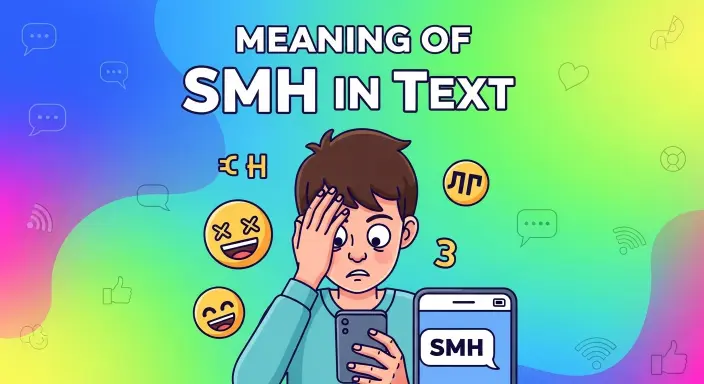
When you chat online, you often see short forms like LOL, BRB, or SMH. These small words save time and help people show emotions quickly. One popular term is SMH. Many people use it in texting, social media, gaming chats, and comment sections.
SMH is very common on platforms like Instagram, Twitter (X), TikTok, WhatsApp, and Discord. People use it when they feel disappointed, surprised, or annoyed by something someone said or did.
For example, a friend may forget an obvious answer, post something silly, or make a bad decision. Instead of writing a long message, someone may simply type SMH.
Understanding this term helps you follow conversations online and respond correctly. Without knowing its meaning, a message may look confusing.
In this guide, you will learn the meaning of SMH in text, its history, examples, and how people use it in different situations.
Definition & Meaning
SMH stands for Shaking My Head.
People use this abbreviation to show disappointment, disbelief, or frustration. It usually means the person cannot believe what they just saw or heard.
Instead of writing a full sentence like:
I can’t believe you did that.
Someone may simply write:
SMH.
Simple Meaning
SMH = Shaking My Head in disappointment or disbelief.
It represents the physical action of shaking your head when something seems silly or disappointing.
Example in Conversation
Friend 1: I forgot my phone at home again.
Friend 2: SMH. You do this every week.
Friend 1: I spent all my money on video game skins.
Friend 2: SMH bro, save some money.
What Emotion Does SMH Show?
People often use SMH when they feel:
- Disappointed
- Annoyed
- Embarrassed for someone
- Surprised by something silly
Example on Social Media
Someone posts a strange opinion.
Comment reply:
SMH… people really believe this?
Example in Gaming Chat
Player 1: I walked into the enemy team alone.
Player 2: SMH why would you do that?
In simple words, SMH is a quick way to show frustration or disbelief in online conversations.
Background & History
The term SMH started becoming popular in the early 2000s when texting and internet chats became common.
Back then, people used SMS messages with character limits. Because of this, users started creating short abbreviations.
Some famous early internet abbreviations included:
- LOL – Laughing Out Loud
- BRB – Be Right Back
- OMG – Oh My God
- SMH – Shaking My Head
Early Internet Usage
SMH was first seen in online forums, chat rooms, and instant messaging platforms like:
- AOL Messenger
- MSN Messenger
- Yahoo Chat
Users typed SMH when they reacted to something foolish or frustrating.
Growth Through Social Media
The popularity of SMH grew quickly when social media platforms appeared:
- Facebook
- Twitter (X)
- Reddit
- Instagram
People started using it in comments, memes, and viral posts.
Example tweet:
People still believe fake news? SMH.
Meme Culture
Memes helped spread the term even more.
Many memes include captions like:
SMH at this situation.
or
SMH my head.
Interestingly, SMH my head is technically repetitive, because SMH already means shaking my head. But people still use it for humor.
Modern Usage
Today, SMH is used everywhere:
- Text messages
- TikTok comments
- Gaming chats
- Group chats
- Online debates
It has become a normal part of internet slang worldwide.
Usage in Various Contexts
SMH is used in many online situations. The meaning stays similar but the tone may change.
1. Text Messaging
Friends often use SMH when reacting to silly behavior.
Example
Friend 1: I forgot my wallet at the restaurant.
Friend 2: SMH… again?
2. Social Media
People often use SMH in comments or reactions.
Example comment:
People still fall for this scam? SMH.
3. Gaming
Gamers use SMH when teammates make mistakes.
Example
Player 1: I attacked the boss alone.
Player 2: SMH bro we said wait.
4. Casual Conversations
Even in normal chat apps like WhatsApp, people use it.
Example
Friend 1: I watched the same movie three times today.
Friend 2: SMH you need a hobby.
5. Reaction to News
Sometimes people use SMH to react to news.
Example:
Another price increase? SMH.
In short, SMH works as a quick reaction to something frustrating or unbelievable.
Common Misconceptions & Clarifications
Some people misunderstand the meaning of SMH.
Misconception 1: SMH Means So Much Hate
This is incorrect.
Correct meaning:
SMH = Shaking My Head
Misconception 2: SMH is Always Angry
Not always.
Sometimes it is used playfully or jokingly.
Example:
Friend: I ate your chocolate.
Reply: SMH 😂
Here it is friendly teasing, not serious anger.
Misconception 3: It is Always Negative
Mostly yes, but sometimes it just shows surprise or disbelief.
Example:
You finished the whole pizza? SMH.
Misconception 4: It Is Rude
SMH can sound rude depending on tone and situation.
If used with strangers or in serious discussions, it may feel disrespectful.
Example:
SMH you’re wrong.
This can sound dismissive.
Similar Terms & Alternatives
People use several other expressions similar to SMH.
Common Alternatives
- Facepalm
- OMG
- Seriously?
- I can’t believe this
- Wow
Comparison Table
| Term | Meaning | Tone |
| SMH | Shaking my head | Disappointment |
| Facepalm | Embarrassment | Frustrated |
| OMG | Surprise | Shock |
| Seriously? | Questioning behavior | Confused |
| Wow | Surprise or sarcasm | Mixed |
These expressions serve similar purposes but SMH specifically shows disbelief or disappointment.
How to Respond to This Term
When someone sends SMH, your response depends on the situation.
Casual Response
Friend: SMH you forgot again.
Reply: Oops my bad 😅
Funny Response
Friend: SMH you lost again.
Reply: I’m just letting you win.
Honest Response
Friend: SMH why did you do that?
Reply: Yeah that was a bad decision.
Professional Response
If used in a workplace chat:
Reply:
I understand the concern. I will fix it.
Regional or Cultural Differences
SMH is mainly popular in English-speaking online communities.
However, because of social media, people worldwide now use it.
Countries where SMH is commonly seen:
- United States
- United Kingdom
- Canada
- Australia
- India
- Pakistan
Even non-native English speakers use SMH in gaming chats and online comments.
Local Variations
Some languages have similar reactions.
Examples:
Spanish:
No puedo creerlo.
Hindi/Urdu style reactions:
Yeh kya hai…
These express the same feeling as SMH.
Comparison with Similar Terms
Here is another comparison with similar expressions.
| Expression | Meaning | Usage |
| SMH | Shaking my head | Disappointment |
| LOL | Laughing out loud | Humor |
| OMG | Oh my God | Shock |
| BRB | Be right back | Temporary leave |
| Facepalm | Embarrassment | Frustration |
SMH is unique because it shows reaction without needing a full sentence.
Usage in Online Communities & Dating Apps
SMH appears frequently in online communities and apps.
Social Media
Users comment:
SMH people still believe this.
Gaming Platforms
Gamers use it when teammates make mistakes.
Example:
Player: I ran into the enemy base.
Teammate: SMH bro.
Dating Apps
Sometimes people use SMH jokingly.
Example chat:
Person 1: You didn’t reply for two days.
Person 2: SMH I thought you ghosted me.
Tip
When you see SMH online:
- Check the tone
- Look at emojis
- Understand the context
This helps you avoid misunderstanding.
Hidden or Offensive Meanings
SMH itself is not offensive.
However, the tone may feel rude depending on how it is used.
Example:
Comment:
SMH you people never learn.
This may sound insulting.
But in friendly conversations it is harmless.
Example:
Friend:
SMH you ate the last slice again.
Tone matters more than the word itself.
Suitability for Professional Communication
SMH is not recommended in formal communication.
Avoid it in:
- Business emails
- Job messages
- Academic writing
- Professional reports
Why?
Because internet slang may look unprofessional or disrespectful.
Better Professional Alternatives
Instead of SMH, say:
- I’m surprised by this result.
- This seems concerning.
- Let’s review the issue.
Example:
Instead of
SMH this report is wrong.
Write:
There seems to be an issue with this report.
FAQs:
1. What does SMH mean in text?
SMH means Shaking My Head. It shows disappointment or disbelief.
2. Is SMH rude?
Not always. It can be playful among friends but may sound rude in serious discussions.
3. Do people still use SMH?
Yes. It is still widely used on social media, texting, and gaming chats.
4. Can SMH be used in professional messages?
It is not recommended in professional communication.
5. What is the opposite of SMH?
Expressions like Nice, Good job, or That’s great show positive reactions.
6. What does SMH my head mean?
It is a humorous repetition, because SMH already means shaking my head.
Conclusion:
The term SMH is one of the most common internet abbreviations used today. It stands for Shaking My Head and expresses disappointment, disbelief, or frustration. People often use it in text messages, social media comments, gaming chats, and casual conversations.
The phrase started in early internet chat culture and quickly spread through social media and memes. Today, it is recognized by millions of users worldwide.
However, context matters. While SMH works well in casual conversations with friends, it may sound rude or unprofessional in formal settings.
Understanding terms like SMH helps you follow online conversations, react appropriately, and communicate more naturally in digital spaces.
Now that you know the meaning, examples, and proper usage of SMH, you can easily recognize it and use it correctly in your own messages.