In today’s fast world, people love short words in messages. One popular short form is OTG. You may see it in chats, social media, or games. Many people use it every day, but not everyone knows what it means.
OTG is simple, but its meaning can change based on context. That is why it is important to understand it well. If you use it wrong, the message may confuse others.
You may see OTG while texting a friend, chatting online, or even in work groups. It helps save time and makes typing fast.
In this guide, you will learn everything about OTG. We will explain its meaning, history, uses, and examples. We will also show how to reply to it in different ways.
By the end, you will feel confident using OTG in your daily chats.
Definition & Meaning
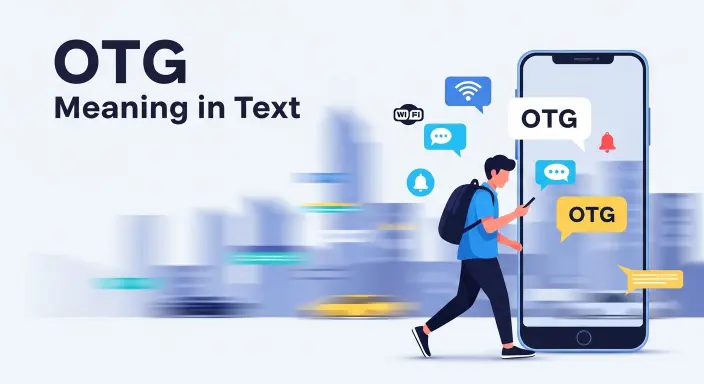
OTG stands for On The Go.
It means that someone is busy, moving, or not staying in one place. When a person says OTG, they are often doing something and may not be able to talk much.
Simple Meaning
- OTG = On The Go
- It shows movement or busyness
Example in Text
Friend 1: Where are you?
Friend 2: I’m OTG right now, talk later.
In this case, the person is saying they are busy or traveling.
Other Possible Meaning
Sometimes, OTG can also mean:
- Off To Go (less common)
Example:
Friend 1: Good night!
Friend 2: OTG, see you tomorrow!
But this use is rare. Most people use OTG as On The Go.
Key Point
OTG shows that someone is active, busy, or moving.
It is short, quick, and easy to type. That is why it is popular in texting and chats.
Background & History
OTG comes from the phrase On The Go. This phrase has been used for many years in English.
In the past, people used full sentences like:
- I am on the go.
- I am busy right now.
But with the rise of mobile phones and texting, people wanted shorter words.
How OTG Became Popular
- Started with SMS texting
- Grew with social media apps
- Became common in chat apps and games
People began to shorten phrases to save time. OTG became one of those useful shortcuts.
Modern Usage
Today, OTG is used:
- In WhatsApp chats
- On social media posts
- In gaming chats
- In quick replies
Change Over Time
Before:
- Full sentences were common
Now:
- Short forms like OTG are normal
Key Point
OTG is part of modern internet language. It helps people communicate faster.
Usage in Various Contexts
OTG is used in many situations. Let’s look at different contexts.
1. Texting
Friend 1: Can you talk?
Friend 2: OTG, call you later.
2. Social Media
Post:
Busy day, always OTG!
3. Gaming
Player 1: Join the match?
Player 2: OTG, give me 10 mins.
4. Work Chat
Colleague: Need update?
You: I’m OTG, will send soon.
5. Daily Conversation
Mom: Where are you?
You: OTG, coming home.
Key Point
OTG is flexible. It fits many situations where you are busy or moving.
Common Misconceptions & Clarifications
Some people misunderstand OTG.
Misconception 1: OTG Means Offline
❌ Wrong
✔️ It means busy, not offline
Misconception 2: OTG Is Always Travel
❌ Not always
✔️ It can mean busy, not just traveling
Misconception 3: OTG Has One Meaning
❌ Wrong
✔️ It can mean different things based on context
Example
Friend: Why not reply?
You: I was OTG.
Here, it means busy, not traveling.
Important Note
Context matters a lot.
Similar Terms & Alternatives
Here are some similar words:
| Term | Meaning |
| BRB | Be right back |
| AFK | Away from keyboard |
| Busy | Not free |
| On my way | Traveling |
Examples
Friend 1: Where are you?
Friend 2: On my way.
Friend 1: Why silent?
Friend 2: Busy.
Key Point
OTG is more casual than full phrases.
How to Respond to This Term
You can reply in different ways.
1. Casual
Okay, talk later.
2. Funny
OTG? Don’t forget me 😄
3. Professional
Understood. Please update when available.
4. Privacy-Friendly
No problem, message when free.
Dialogue Example
Friend: OTG right now.
You: No worries, catch you later.
Regional or Cultural Differences
OTG is mostly used in English-speaking chats.
Global Use
- Popular worldwide
- Used in online communities
In South Asia
People mix OTG with local language:
- OTG hun, baad mein baat karte hain.
Key Point
OTG is understood globally but used mostly in casual English chats.
Comparison with Similar Terms
| Term | Meaning | Use Case |
| OTG | On the go | Busy/moving |
| BRB | Be right back | Short break |
| AFK | Away from keyboard | Not active |
| OMW | On my way | Traveling |
Difference
- OTG = Busy life
- OMW = Going somewhere specific
Usage in Online Communities & Dating Apps
OTG is common online.
On Social Media
Always OTG, no time to rest.
On Dating Apps
Person 1: What are you doing?
Person 2: OTG, will reply later.
Tip
Don’t overuse it. It may seem like you are not interested.
Hidden or Offensive Meanings
OTG is not offensive.
But tone matters.
Example
Message: OTG, can’t talk.
- Can sound polite or rude depending on tone
Tip
Add soft words:
- Hey, OTG right now, talk later 😊
Suitability for Professional Communication
OTG is not ideal for formal work emails.
Avoid in
- Emails
- Reports
- Formal messages
Use Instead
- I am currently busy.
- I will respond shortly.
Example
❌ OTG, will reply.
✔️ I am currently on the move and will respond soon.
FAQs:
1. What does OTG mean in texting?
It means On The Go.
2. Is OTG formal?
No, it is casual.
3. Can OTG mean something else?
Yes, but rarely.
4. Is OTG rude?
No, but tone matters.
5. Where is OTG used?
In chats, social media, and games.
6. Can I use OTG at work?
Only in informal chats.
7. Is OTG popular?
Yes, very common today.
Conclusion:
OTG is a simple and useful short form. It means On The Go and shows that someone is busy or moving. It is widely used in texting, social media, and online chats.
Understanding OTG helps you communicate better. You can use it to save time and reply quickly. But always remember that context matters. The meaning can change based on how and where you use it.
In casual chats, OTG is perfect. In professional settings, it is better to use full sentences.
Now you know how to use OTG, how to reply to it, and when to avoid it. This makes your communication clear and effective.