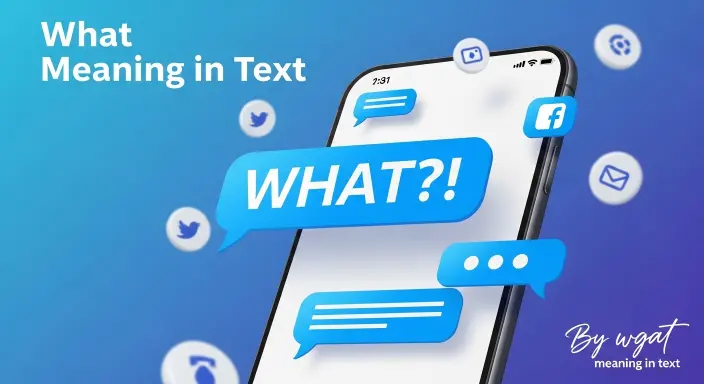
Have you ever received a text that just says what? Or maybe someone typed wgat? by mistake? It may look simple. But this small word can mean many things.
In daily chats, texting, gaming, and social media, what is used all the time.
For example:
Ali: I just won 10,000 rupees!
Sara: What?!
Same word. Different feeling.
Understanding what what means in text is important. Why? Because tone is not always clear in messages. A simple what can sound curious, rude, funny, or shocked.
If you understand the meaning behind it, you can reply the right way. That helps avoid confusion and keeps conversations smooth.
Definition & Meaning
What Does What Mean in Text?
The word what is a question word. It is used to ask for information.
In texting, it can mean:
- Asking for details
- Showing confusion
- Expressing shock
- Reacting to surprising news
- Asking someone to repeat
If someone types wgat, it is usually just a typing mistake of what.
Basic Meaning
What = Tell me more / I don’t understand / Explain
Examples in Text
1. Asking for Information
Ahsan: I bought something today.
Bilal: What?
Here, Bilal wants more details.
2. Showing Shock
Hina: I crashed my car.
Zara: What?!
Now it shows surprise.
3. Not Hearing Properly (Online Version)
Friend: Let’s meet at 7.
You: What? I didn’t get that.
Tone Matters
The meaning changes based on:
- Question marks (?)
- Exclamation marks (!)
- Capital letters (WHAT?!)
- Emojis
For example:
- What. → Can sound serious or annoyed.
- What?? 😂 → Sounds playful.
So even one word can have many feelings behind it.
Background & History
The word what is very old. It comes from Old English. It was used in early English writings many centuries ago.
Over time, what stayed in the language because it is simple and useful. It helps people ask questions.
How It Changed in Digital Life
Before texting, people used what in speech or letters.
Now, in modern times:
- It is used in SMS
- It is common on WhatsApp
- It appears in Instagram comments
- It is used in gaming chats
People also shorten words while typing fast. That is why mistakes like wgat happen.
In memes and social media, what is also used dramatically:
WHAT IS THIS?!
It adds humor or drama.
Today, what is one of the most used English words online.
Usage in Various Contexts
1. Texting
Most common use.
Mom: Come home now.
You: What? Why?
2. Social Media
Used in comments for surprise.
Post: I quit my job to travel the world.
Comment: What?? That’s chaotic
3. Gaming
Gamers use it when confused.
Player 1: The boss is behind you!
Player 2: What?!
4. Casual Conversation
Used to react quickly.
Friend: I saw your crush today.
You: What?!
5. Professional Setting
More formal version:
Instead of What? say:
- Could you clarify?
- Sorry, what do you mean?
Common Misconceptions & Clarifications
Misconception 1: What? is Always Rude
Not true.
It depends on tone.
What? alone can sound rude.
But What do you mean? sounds polite.
Misconception 2: It Always Means Confusion
Sometimes it shows shock.
You got married?
What?!
That shows surprise, not confusion.
Misconception 3: Wgat Has Special Meaning
No.
It is usually just a typo.
Similar Terms & Alternatives
Here are words people use instead of what:
| Term | Meaning | Tone |
| Huh? | Didn’t understand | Casual |
| Sorry? | Please repeat | Polite |
| Excuse me? | Repeat or shock | Formal |
| Come again? | Repeat that | Friendly |
| Wait, what? | Shock | Dramatic |
Example:
Ali: I failed the exam.
You: Wait, what?
This shows strong surprise.
How to Respond to This Term
If someone texts What?, here are ways to respond:
1. Casual Reply
Let me explain.
2. Funny Reply
You heard me 😎
3. Professional Reply
Sure, I’ll clarify.
4. Privacy-Conscious Reply
I’ll tell you later.
Example Conversation
Friend: What?
You: I said I’m moving to Lahore.
Regional or Cultural Differences
The word what is English. It is widely used in:
- USA
- UK
- Pakistan
- India
- Canada
In Urdu, people may say:
- Kya?
In texting in Pakistan, people mix languages:
What kar rahe ho?
This is called code-switching.
In different cultures, tone matters a lot. In some places, saying only What? may sound disrespectful.
Comparison with Similar Terms
| Word | Purpose | Formal? | Emotion |
| What? | Ask info | Neutral | Varies |
| Huh? | Didn’t hear | No | Casual |
| Sorry? | Repeat | Yes | Polite |
| What?! | Shock | No | Surprise |
Key Difference:
- What? = Neutral base word
- What?! = Strong emotion
- Sorry? = Polite
Usage in Online Communities & Dating Apps
On platforms like:
- Tinder
- Instagram
- Facebook
- Gaming chats
What? is often used for surprise or flirting.
Example:
Match: I love pineapple on pizza.
You: What?! 😂
Here it creates playful tension.
In gaming:
Teammate: You eliminated 5 players alone.
You: What?! No way!
Tip: Add emojis to soften tone.
Hidden or Offensive Meanings
By itself, what is not offensive.
But tone can change meaning.
What. (with period)
Can sound angry.
WHAT?!
Can sound aggressive.
Context matters.
If said in all caps repeatedly, it may feel rude.
Always think about:
- Relationship
- Situation
- Tone
Suitability for Professional Communication
In formal emails, avoid writing only What?
Instead use:
- Could you please clarify?
- I didn’t understand that part.
- May I ask what you mean?
Example:
❌ What?
✅ Could you please explain further?
Professional communication needs clarity and respect.
FAQs:
1. Does wgat have a special meaning?
No, it is usually a typing mistake.
2. Is What? rude?
It depends on tone and punctuation.
3. Why do people type What?!
To show strong surprise.
4. Can I use What? in emails?
Not alone. Use polite versions.
5. Is it common in Pakistan?
Yes, especially in mixed English-Urdu chats.
6. Why does tone change meaning?
Because text has no voice tone.
Conclusion:
The word what may look small. But it carries many meanings.
In texting and social media, tone changes everything. A simple question mark, emoji, or capital letter can change how it feels.
Understanding this helps you:
- Avoid misunderstandings
- Respond correctly
- Communicate clearly
If in casual chat, gaming, dating apps, or professional emails, knowing how and when to use what makes your conversations better.
Small word. Big impact.