In today’s digital world, texting and online chatting have their own language. One of the most popular phrases you might see is YOLO . It’s short, catchy, and often pops up in social media posts, messages, and even gaming chats.
Understanding what YOLO means can help you connect better with friends, follow trends, and even avoid misunderstandings.
If you see it in Instagram captions, Twitter tweets, or while chatting with friends, knowing YOLO’s meaning is more than just knowing slang it’s about understanding digital culture.
In this article, we will explore what YOLO stands for, its history, how it’s used, and whether it’s suitable for professional settings. By the end, you’ll know how to use it correctly and respond naturally in any conversation.
Definition & Meaning
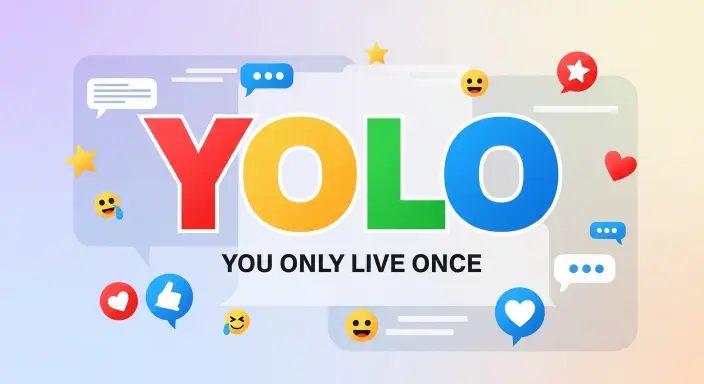
YOLO is an acronym for You Only Live Once. It is a reminder to embrace life, take risks, and live in the moment.
Example in text:
- Friend 1: I’m thinking of skydiving this weekend!
- Friend 2: Go for it! YOLO!
In essence, YOLO encourages spontaneity and making the most of opportunities.
Other variations might appear with slight changes:
- YOLO, so let’s try it! – motivating friends.
- YOLO maybe I shouldn’t eat that entire cake. – humorous self-reflection.
Understanding YOLO helps in interpreting messages correctly and joining cultural conversations online.
Background & History
YOLO gained popularity in the early 2010s, largely because of pop culture and music. The term became widely recognized after a famous rapper used it in a song that went viral. Since then, it has become a cultural catchphrase, appearing in memes, tweets, and Instagram posts.
Originally, YOLO was a motivational phrase. Over time, its use evolved:
- Early use: Encouraging adventurous behavior.
- Modern use: Often humorous or ironic, sometimes even sarcastic.
Today, you’ll see YOLO in casual messaging, gaming, and social media captions. It has become a shorthand for living freely and embracing moments.
Usage in Various Contexts
YOLO is versatile. Here’s how it appears in different situations:
Texting with friends:
- Alex: Want to skip work and go hiking?
- Jordan: YOLO! Let’s do it!
Social media captions:
- Sunset views at the beach 🌅 #YOLO
Gaming communities:
- Player1: I’m going full attack mode, no backup!
- Player2: YOLO! Let’s see what happens.
Casual conversation:
- Friend: Should I try the new spicy burger?
- You: YOLO, it’s worth a shot!
Key point: YOLO often signals risk-taking, fun, or boldness.
Common Misconceptions & Clarifications
Some people misunderstand YOLO as an excuse for reckless behavior, but it doesn’t necessarily mean do anything without thinking.
Misconception example:
- Person: YOLO! I’ll quit my job without a plan!
- Clarification: YOLO encourages embracing opportunities responsibly, not being careless.
It can also be misinterpreted in professional settings, which is why understanding context is crucial.
Similar Terms & Alternatives
Other phrases express a similar sentiment:
| Term | Meaning | Usage Example |
| Carpe Diem | Seize the day | Carpe diem! Apply for that job! |
| FOMO | Fear of missing out | FOMO is real, join the party! |
| Live a Little | Be adventurous & bold | Live a little, try that new cuisine! |
These alternatives may be more suitable in formal or professional settings.
How to Respond to This Term
Responses vary depending on style:
Casual:
- Haha, true! YOLO indeed.
Funny:
- YOLO? More like ‘Yolo-later’ for me 😂
Professional:
- Interesting perspective. I see your point about seizing opportunities.
Privacy-conscious:
- Noted! I’ll consider it.
Tip: Match the tone of the conversation to avoid sounding awkward.
Regional or Cultural Differences
YOLO is most common in English-speaking countries, but equivalent phrases exist in other languages:
- French: On ne vit qu’une fois
- Spanish: Sólo se vive una vez
Some regions might use it more humorously or ironically, while others take it seriously. Cultural context is important.
Comparison with Similar Terms
| Term | Meaning | Tone | Formality |
| YOLO | You only live once | Casual/fun | Informal |
| Carpe Diem | Seize the day | Serious/motivational | Semi-formal |
| FOMO | Fear of missing out | Casual/fun | Informal |
| Live a Little | Be adventurous | Casual/fun | Semi-formal |
YOLO stands out for its modern digital slang vibe, while others feel more traditional or formal.
Usage in Online Communities & Dating Apps
YOLO is widely used on platforms like Tinder, Twitter, Instagram, and gaming forums:
- Tinder: YOLO, swipe right 😉
- Gaming chat: Going solo in this boss fight YOLO!
- Social media: Used in memes, stories, or hashtags.
Tip: Respond based on humor or adventure context, not literal instructions.
Hidden or Offensive Meanings
YOLO itself is generally safe, but tone and context matter:
- In some situations, it could encourage risky behavior, which may not be appropriate.
- Sarcasm or irony might confuse people unfamiliar with slang.
Key point: Always read the context before responding.
Suitability for Professional Communication
YOLO is mostly informal. Avoid using it in emails, reports, or meetings.
Professional alternatives:
- Let’s take this opportunity.
- We should embrace this challenge.
In short, YOLO is for casual, social, or friendly conversations, not formal professional communication.
FAQs:
- Q: What does YOLO mean?
A: YOLO means You Only Live Once. It encourages enjoying life and taking opportunities. - Q: Can YOLO be used in professional emails?
A: No, it’s informal. Use alternatives like seize the opportunity. - Q: Is YOLO dangerous or reckless?
A: Not necessarily it depends on context and responsible usage. - Q: Are there equivalents in other languages?
A: Yes, for example, French On ne vit qu’une fois and Spanish Sólo se vive una vez. - Q: Where is YOLO commonly used?
A: Texts, social media, gaming, and casual chats. - Q: Can YOLO be used ironically?
A: Yes, many people use it humorously or sarcastically. - Q: What are similar terms to YOLO?
A: Carpe Diem, FOMO, and Live a Little.
Conclusion:
YOLO, which stands for You Only Live Once, has become a popular phrase in texting, social media, and casual conversations. It reminds people to embrace opportunities, enjoy life, and take risks responsibly.
While often used humorously or ironically, the term also reflects modern digital culture and the way young people communicate online. Understanding YOLO helps you connect better with friends, interpret messages correctly, and participate in trending conversations.
However, context is important: using YOLO in professional settings or formal communication is usually inappropriate, and alternatives like seize the opportunity or make the most of it are better suited there.
By knowing how and when to use YOLO, you can engage confidently in casual chats, social media posts, gaming conversations, and online communities without misunderstanding or misusing the phrase.
In short, YOLO encourages a balance of fun, spontaneity, and responsibility in everyday life.