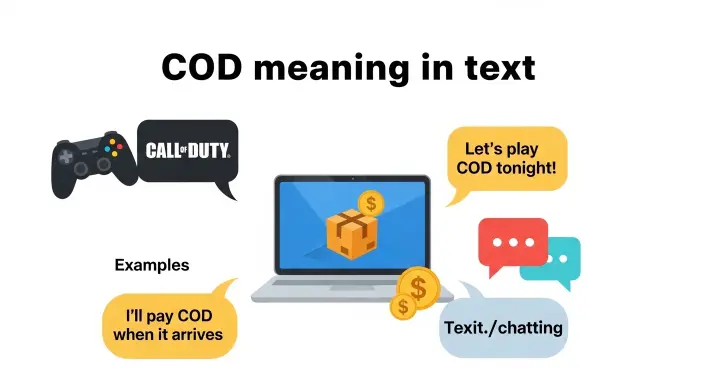
If you spend time texting, chatting online, or using social media, you may have seen the abbreviation COD and wondered what it means. Text messages often use short forms to save time, and COD is one of many acronyms that can have different meanings depending on the conversation. Understanding these abbreviations can help you communicate more clearly and avoid confusion.
In texting, COD commonly stands for Cash on Delivery, which means payment is made when a product is delivered. However, in gaming conversations, COD may refer to the popular video game series Call of Duty. The meaning usually depends on the context in which the term is used.
This article will explain the meaning of COD in text, its different uses, examples of how people use it in conversations, and when you might come across this abbreviation. By the end, you will have a clear understanding of what COD means and how to use it correctly in everyday communication.
Definition & Meaning
COD is an abbreviation with several meanings depending on context, but the most common ones are:
- Cash on Delivery – Used in shopping or professional settings to indicate payment upon receiving goods.
- Call of Duty – A popular video game series, often referred to as COD in gaming circles.
- Cause of Death – Occasionally used in serious contexts, like medical reports.
Examples in daily use:
- Shopping:
Friend: Did you order the headphones?
You: Yes, COD. I’ll pay when they arrive. - Gaming:
Gamer1: Wanna play COD tonight?
Gamer2: Sure, I’m up for it - Medical/Serious Context:
Doctor: The report lists COD as cardiac arrest.
Knowing the correct meaning depends on context, tone, and who you are communicating with. In casual chats, COD is usually about gaming or delivery, while in formal documents, it might have a serious implication.
481 Meaning in Chat
The term 481 in chat is a piece of numeric slang that can confuse many people at first glance. Unlike common abbreviations such as LOL or BRB, numbers like 481 do not have a universal fixed meaning. Instead, their interpretation depends heavily on context, platform, and the community using them.
In most casual online conversations, 481 is not widely recognized as a standard internet slang code. However, in some niche or personal chat groups, people may use it as a coded expression, inside joke, or shortcut phrase.
For example, users sometimes assign numbers to letters using phone keypad logic or personal meaning systems. In that case, 481 could represent a hidden message known only to a specific group.
Another possible interpretation is that 481 is used as a placeholder or random numeric reply, similar to how people type 123 or 000 when they want to respond quickly without words. In gaming chats or fast-paced messaging, players may use numbers like this just for speed, humor, or randomness.
Example conversation:
A: Are you coming online?
B: 481 😂
Here, the reply does not carry a literal meaning but rather shows casual or playful behavior.
It is important to understand that numbers like 481 do not have a fixed global meaning in chat language. Their meaning changes depending on how and where they are used. So, always look at the surrounding message and tone before interpreting it.
Background & History
COD started as a professional term in commerce, meaning Cash on Delivery. Long before online shopping, this was how many people paid for goods shipped to their homes.
With the rise of video games, COD also became shorthand for Call of Duty, a franchise launched in 2003. Gamers quickly adopted COD to save time in messaging.
Over time, COD has also appeared in medical records as Cause of Death, showing its diversity in usage. Today, it’s common across texting, emails, gaming chats, and social media. The meaning depends entirely on context, which can sometimes lead to humorous or confusing misunderstandings.
COD Meaning in Chat
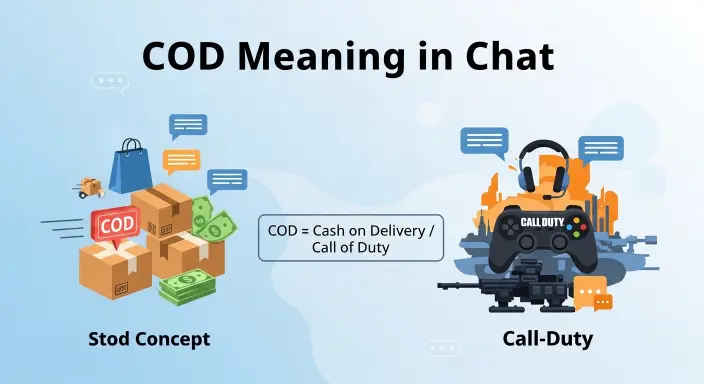
The term COD in chat is commonly used in online conversations, and its meaning can change depending on the situation. The most popular meaning of COD is Cash on Delivery. This is widely used in online shopping, e-commerce orders, and delivery services.
When someone says COD available, it means you can pay for the product when it arrives instead of paying in advance. For example, a customer might text, Is COD available for this item? and the seller replies, Yes, COD is available.
This makes online shopping safer and more trusted for many users.
However, in gaming and casual chats, COD can also mean Call of Duty, which is a famous video game series. Gamers often use it when talking about matches or gameplay. For example: Let’s play COD tonight.
In rare cases, COD may also stand for other short forms depending on context, but these two are the most common in daily chat use. Understanding the conversation context is very important because the meaning changes based on whether you are talking about shopping or gaming. So, always read the situation carefully before assuming the meaning of COD in chat.
Usage in Various Contexts
1. Texting & Chatting:
- Friend: I bought a new laptop COD.
- You: Nice! Hope it arrives soon.
2. Social Media:
- Hashtags: #CODChallenge (gaming)
- Post: Ordered my sneakers COD today.
3. Gaming:
- Gamer1: COD squad tonight?
- Gamer2: Count me in
4. Casual Conversations:
- Parent: Did you know COD can also mean Cause of Death?
- Teen: Yeah, only in serious reports, not texts
COD Acronym

The acronym COD is widely used in texting, gaming, online shopping, and business communication. Its meaning depends on the context, but the most common interpretation is Cash on Delivery.
This means that payment is made when a product is delivered, not in advance. COD is especially popular in online shopping platforms where buyers prefer to pay only after receiving their order.
For example, a customer might say, I want COD option for this order, which means they will pay in cash when the parcel arrives.
In another context, especially in gaming, COD stands for Call of Duty, which is a famous first-person shooter game series. Players often use COD when discussing matches, updates, or strategies. For example, Let’s play COD tonight refers to playing the Call of Duty game.
In business or logistics, COD can also refer to Collect on Delivery, which is similar to cash on delivery but may include card or other payment methods at the time of delivery.
Example in Chat:
A: Do you want prepaid or COD?
B: COD please, I don’t want to pay online.
Because COD has multiple meanings, understanding the context is very important. In shopping conversations, it usually means cash on delivery, while in gaming chats, it refers to Call of Duty. This flexibility makes COD a common but sometimes confusing acronym in online communication.
Common Misconceptions & Clarifications
- Some think COD always refers to Call of Duty, but context is key.
- Others confuse COD with other gaming abbreviations like LOL or BRB.
- COD as Cause of Death can sound alarming if misused in casual chats.
Example of a misunderstanding:
- Friend: COD is fun tonight
- Misinterpretation: Did you mean death?
- Correct meaning: Call of Duty session.
Similar Terms & Alternatives
| Term | Meaning | Example |
| C.O.D | Cash on Delivery | I’ll pay COD when it arrives. |
| CoD | Call of Duty | Let’s play CoD tonight. |
| COD | Cause of Death | The COD was listed as natural causes. |
| FOB | Free on Board | Shipping term, alternative to COD in commerce |
Alternatives can help avoid confusion depending on your audience.
How to Respond to This Term
Casual:
- Cool, I’ve got COD too
Funny:
- COD? I hope you mean the game, not the serious stuff
Professional:
- Understood. The shipment will be COD as agreed.
Privacy-conscious:
- Noted. I’ll handle payment securely.
Playing COD Meaning
The phrase playing COD most commonly refers to playing the popular video game Call of Duty. In online chats, gaming communities, and social media, COD is a short form used for this famous first-person shooter game series.
So when someone says I am playing COD, it simply means they are currently playing Call of Duty, not doing any real-life activity.
Call of Duty is one of the most well-known shooting game franchises in the world. It includes different versions like Modern Warfare, Warzone, Black Ops, and more. Players usually team up online and compete against other players in fast-paced combat missions.
Example in Conversation
A: Where are you?
B: I’m playing COD right now, can’t talk 😄
This shows that the person is busy gaming and cannot respond immediately.
Why COD is Popular in Texting
People often use playing COD in messages because:
- It is quick to type
- It is widely understood among gamers
- It saves time instead of writing full game names
- It shows involvement in gaming culture
Important Note
Sometimes beginners confuse COD with Cash on Delivery, which is used in online shopping. But in gaming chats, it almost always means Call of Duty unless the conversation is about shopping or payments.
Tone and Usage
Playing COD is informal and mostly used among friends or gaming communities. It is not used in professional communication.
In short, playing COD means enjoying a session of Call of Duty, usually online with friends or global players in a competitive gaming environment.
Regional or Cultural Differences
- In the US and UK, COD often means Call of Duty among gamers.
- In Asia, COD is widely recognized as Cash on Delivery, especially with online shopping.
- In medical contexts worldwide, COD is standard for Cause of Death.
Different cultures emphasize one meaning over another, so it’s always good to consider context and audience.
Comparison with Similar Terms
| Abbreviation | Common Use | Notes |
| COD | Call of Duty | Gaming abbreviation |
| C.O.D | Cash on Delivery | E-commerce / shipping |
| BRB | Be Right Back | Chatting, informal |
| LOL | Laugh Out Loud | Chatting, informal |
This helps differentiate COD from casual chat abbreviations.
COD Full Form in Chat

The term COD is very common in online chatting, shopping apps, and social media conversations. In chat language, COD mostly stands for Cash On Delivery.
It is widely used when someone orders a product online and chooses to pay at the time of delivery instead of paying in advance.
This method is popular because it feels safer for many buyers, especially in countries where online payment trust is still developing.
For example, if someone says, I ordered shoes on COD, it means they will pay for the shoes when the courier delivers them.
However, COD can also have other meanings depending on the context. In gaming or casual chat, COD may refer to Call of Duty, a famous video game series.
So, if someone says Let’s play COD, they are talking about the game, not payment. This is why understanding context is very important in chat language.
Example conversations:
A: Did you order it online?
B: Yes, COD option selected 👍
A: Are you free tonight?
B: Yes, let’s play COD 🎮
In short, COD has two main meanings in chat: Cash On Delivery and Call of Duty. The correct interpretation depends on the situation. In shopping talks, it refers to payment method, while in gaming chats, it refers to a popular action game.
Usage in Online Communities & Dating Apps
- Tinder: COD might appear jokingly in profiles or messages (I’m addicted to COD).
- Twitter/Reddit: Gamers use COD hashtags for tournaments.
- Gaming Platforms: Most common as Call of Duty abbreviation.
Tips: Always consider if the person is referring to gaming or payment. Misunderstanding can lead to awkward messages.
COD Abbreviation
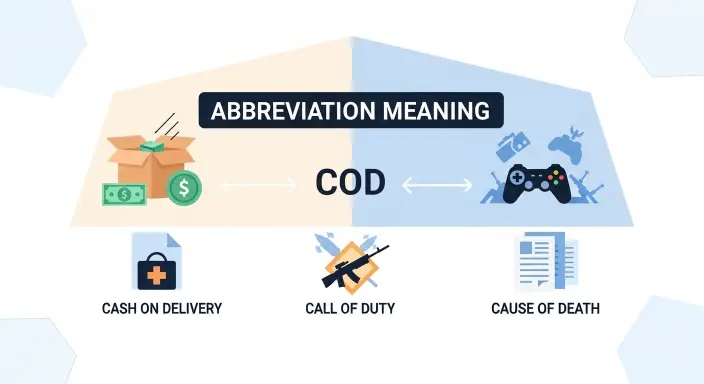
The abbreviation COD is widely used in texting, online shopping, gaming, and business communication. Its meaning depends on the context, but the most common full form is Cash on Delivery.
This is especially used in e-commerce, where a buyer pays for a product only when it is delivered to their home.
For example, when you order clothes or electronics online, you may see the option COD available, meaning you don’t need to pay in advance.
In texting and casual conversation, COD can also stand for Call of Duty, which is a popular first-person shooting game.
Gamers often use it when talking about matches, updates, or strategies. For example, someone might say, Let’s play COD tonight, referring to the game rather than payment terms.
In some business or formal contexts, COD may also mean Cash on Demand or even Cause of Death in medical or legal reports, though these uses are less common in everyday conversation.
Example Usage:
- I ordered shoes on COD. (Cash on Delivery)
- Are you playing COD today? (Call of Duty)
Understanding COD is important because misinterpreting it can lead to confusion, especially in online shopping or gaming chats. It is a simple abbreviation, but its meaning changes based on situation. That’s why context is always important when reading or sending messages containing COD.
Hidden or Offensive Meanings
COD is generally safe, but misinterpretation is possible:
- Mistaking COD (Cause of Death) in casual conversation can offend or alarm someone.
- Tone and context prevent confusion: emoji or clarification can help.
COD Today Meaning
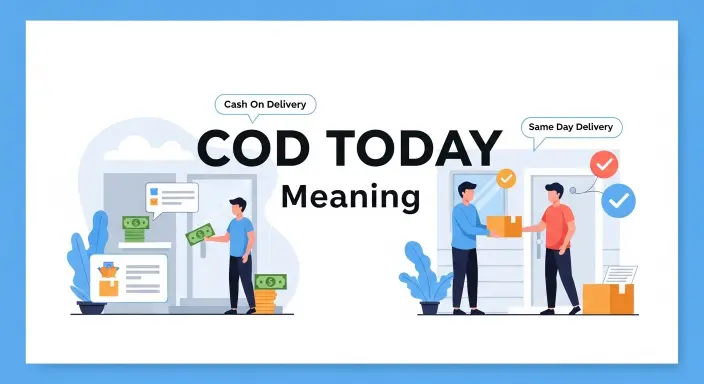
The term COD today is commonly used in online shopping, delivery services, and casual communication. COD stands for Cash on Delivery, which means the buyer pays for a product when it is delivered instead of paying in advance.
When someone says COD today, it usually means that the order will be delivered today and payment will be made at the time of delivery.
This phrase is very popular in e-commerce platforms, food delivery apps, and local courier services, especially in countries where people prefer paying after receiving their items. It gives customers a sense of safety because they can check the product before paying.
Example in conversation:
Customer: Is it available?
Seller: Yes, COD today available in your area.
This means the product can be delivered today and payment will be collected at the doorstep.
In some cases, COD today is also used to confirm fast delivery services, showing urgency and same-day shipping availability.
Why it is important:
- Builds trust between buyer and seller
- Reduces online payment risks
- Encourages faster purchases
However, COD orders may sometimes include extra delivery charges or limited availability depending on location.
In short, COD today means same-day delivery with cash payment at the time of receiving the product, making it one of the most convenient and trusted shopping options in online marketplaces.
Suitability for Professional Communication
- COD as Cash on Delivery: safe for professional use.
- COD as Call of Duty: not appropriate in formal documents.
- Alternative: Use Payment on Delivery instead of COD in official emails.
FAQs:
- What does COD mean in texting?
It usually means Call of Duty or Cash on Delivery, depending on context. - Is COD appropriate in professional emails?
Only as Cash on Delivery. Gaming usage is not professional. - Can COD mean something bad?
Not usually, but Cause of Death can be alarming if misread. - How do I know which COD meaning is correct?
Look at the context, sender, and platform. - Are there similar terms to COD?
Yes C.O.D, CoD, BRB, LOL, depending on context.
Conclusion:
Understanding COD in text is essential in today’s fast-paced digital communication. While the abbreviation can mean Call of Duty, Cash on Delivery, or Cause of Death, the correct interpretation always depends on the context.
In casual texting and social media, COD usually refers to gaming or online shopping, making conversations faster and more convenient.
In professional or serious settings, like emails or medical reports, COD has a more formal meaning, and using it correctly is crucial to avoid misunderstandings.
By recognizing its different uses, you can communicate clearly, respond appropriately, and avoid confusion or awkward situations. COD is more than just a shortcut it reflects the evolution of language in online culture and professional settings alike.
If chatting with friends, making purchases, or participating in gaming communities, knowing COD’s meaning ensures you stay informed, relevant, and confident in all your conversations.

Hi, I’m Nathaniel Carter your go-to source for fresh, trending, and unique text content. At TextTak.com, I curate ideas, inspiration, and engaging snippets that keep you ahead of the curve. If it’s witty messages, viral phrases, or creative text hacks, I make sure your words always stand out. Join me on this journey to make every message unforgettable.