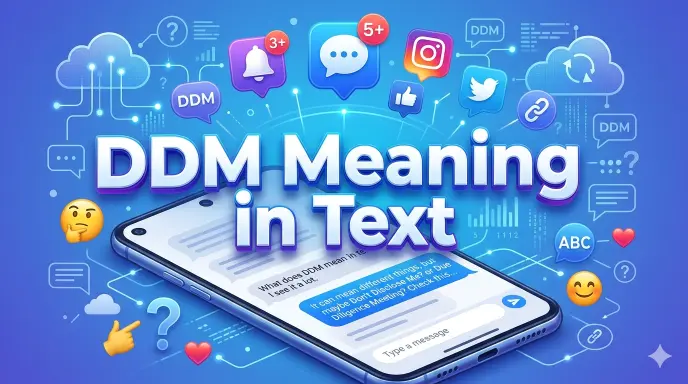
Text messaging is full of short forms and abbreviations that help people communicate quickly. One abbreviation you may have seen is DDM. If you received this term in a text message, social media chat, or online conversation, you might wonder what it means.
The meaning of DDM can vary depending on the context, but it is commonly used in casual digital communication. Understanding these abbreviations can help you avoid confusion and keep up with modern texting trends.
People use text shortcuts like DDM to save time and make conversations more convenient. If you are chatting with friends, family members, or online communities, knowing the meaning of common texting terms can improve your communication skills.
In this article, we will explain the meaning of DDM in text, explore how it is used in different situations, and provide simple examples to help you understand it clearly.
What Does DDM Mean in Text?
DDM is an abbreviation that can have multiple meanings depending on the conversation. The most common meaning in texting and social media is Don’t DM Me. DM stands for Direct Message, so DDM is often used when someone does not want private messages from others.
In some communities, DDM may also mean Direct Digital Marketing, Daily Data Management, or other niche terms. However, in casual online conversations, Don’t DM Me is the interpretation most people recognize.
Here are some examples:
Example 1
Person A: Can I message you later?
Person B: Sorry, DDM.
Example 2
Person A: Why didn’t you reply to my message?
Person B: I have DDM in my bio.
The meaning depends heavily on the context. If someone uses DDM on social media profiles, it usually indicates they prefer not to receive private messages. In professional discussions, it may refer to industry-specific terms.
Because abbreviations often have multiple meanings, always consider the platform, audience, and conversation before assuming a specific definition.
Background and History of DDM
The rise of abbreviations like DDM is closely connected to the growth of internet communication. During the early days of online chat rooms and instant messaging services, users began shortening common phrases to communicate more quickly.
As social media platforms such as Twitter, Instagram, Facebook, and TikTok became popular, the use of abbreviations expanded even further. People wanted faster ways to express ideas while staying within character limits or keeping conversations brief.
The phrase Don’t DM Me likely emerged from the widespread use of direct messaging features. Many public figures, influencers, content creators, and everyday users received large numbers of private messages. To manage their inboxes, some users started writing DDM in their profiles or comments.
Over time, DDM became a recognizable shorthand in online culture. Today, it appears in social media bios, comments, gaming communities, and messaging apps. While the exact meaning may vary by industry or group, the texting-related definition remains the most common.
The evolution of DDM reflects a broader trend in internet language where convenience and speed influence communication styles.
DDM Meaning in Different Contexts
DDM can be used in several different environments.
Text Messaging
In text messages, DDM usually means Don’t DM Me.
Example
Friend: I’ll send you a private message.
You: DDM, please.
Social Media
Many users place DDM in their profiles to discourage private messages.
Example
Bio: Questions welcome, but DDM.
Gaming Communities
Some gamers use DDM to indicate they do not want direct contact outside public chats.
Example
Player 1: Can I message you privately?
Player 2: DDM.
Business and Professional Use
In professional settings, DDM may refer to industry-specific terms such as Direct Digital Marketing or Data Distribution Management.
Example
Manager: We need to improve our DDM strategy.
Employee: Let’s review the campaign metrics.
Online Forums
Forum users sometimes use DDM to maintain privacy and avoid unsolicited messages.
Understanding the context helps determine the correct interpretation.
Common Misconceptions About DDM
Many people assume DDM always has one meaning. This is not true.
Misconception 1: DDM Always Means Don’t DM Me
While this is the most common meaning in texting, some industries use DDM differently.
Misconception 2: DDM Is Rude
DDM is not necessarily rude. It often serves as a polite boundary.
Misconception 3: DDM Is an Official Internet Rule
DDM is simply a personal preference, not a platform-wide rule.
Misconception 4: DDM Has the Same Meaning Everywhere
Different communities may use DDM for different purposes.
Understanding these misconceptions can prevent misunderstandings during online interactions.
Similar Terms and Alternatives
Several abbreviations serve a similar purpose.
| Term | Meaning | Usage |
| DM | Direct Message | Private messaging |
| PM | Private Message | Common on forums |
| IM | Instant Message | Real-time chat |
| DND | Do Not Disturb | Avoid interruptions |
| BRB | Be Right Back | Temporary absence |
| AFK | Away From Keyboard | Gaming and chats |
These alternatives are often used alongside DDM depending on the situation.
How to Respond to DDM
Different situations require different responses.
Casual Response
Got it, no problem.
Friendly Response
Sure, I’ll keep the conversation here.
Funny Response
Message denied. Mission understood
Professional Response
Understood. I’ll communicate through the public channel.
Privacy-Conscious Response
I respect your preference and won’t send private messages.
Responding respectfully helps maintain positive communication.
Regional and Cultural Differences
DDM is primarily used in English-speaking online communities. However, internet slang often spreads globally through social media and gaming platforms.
In some countries, users may prefer local-language equivalents rather than English abbreviations. Younger internet users are generally more familiar with DDM than older generations.
Gaming communities often share common internet language regardless of location. This has helped abbreviations like DDM become internationally recognized.
Cultural attitudes toward privacy also influence how frequently DDM is used. In regions where personal privacy is highly valued, users may display DDM more often in profiles and public posts.
DDM vs Similar Internet Terms
| Term | Full Form | Main Purpose |
| DDM | Don’t DM Me | Discourage private messages |
| DM | Direct Message | Send private messages |
| PM | Private Message | Private communication |
| DND | Do Not Disturb | Avoid interruptions |
| AFK | Away From Keyboard | Temporary absence |
| BRB | Be Right Back | Short break |
The biggest difference is that DDM discourages private communication, while DM and PM encourage it.
DDM in Online Communities and Dating Apps
On platforms like Tinder, X (Twitter), Instagram, Discord, and gaming forums, DDM often signals personal boundaries.
Users may include DDM in their bios to reduce unwanted messages. This is especially common among creators, influencers, and public accounts.
Example
User Bio: Comments welcome. DDM.
Tips for Responding
- Respect the person’s preference.
- Avoid sending unsolicited private messages.
- Continue communication through public channels if appropriate.
- Read profile instructions before contacting someone.
Following these guidelines helps maintain respectful online interactions.
Hidden or Offensive Meanings of DDM
DDM is generally not considered offensive. However, misunderstandings can occur if someone assumes the wrong meaning.
In some professional or technical environments, DDM may refer to completely different concepts unrelated to messaging.
The tone of the conversation also matters. A person using DDM may simply want privacy, not necessarily reject communication altogether.
Always consider:
- The platform
- The audience
- The conversation topic
- The user’s profile information
Context is the key to understanding DDM correctly.
Is DDM Appropriate for Professional Communication?
DDM is usually best suited for casual communication rather than formal business correspondence.
In professional environments, clear language is often preferred.
Instead of DDM, you might say:
- Please do not send direct messages.
- Contact me through official channels.
- Use email for inquiries.
- Public communication is preferred.
Professional communication benefits from clarity because not everyone understands internet abbreviations.
Using full phrases reduces confusion and ensures your message is understood by all audiences.
Frequently Asked Questions:
What does DDM mean in text?
It most commonly means Don’t DM Me.
Is DDM rude?
No. It usually indicates a personal preference regarding private messages.
Can DDM have other meanings?
Yes. Some industries and communities use DDM for different terms.
Where is DDM commonly used?
It is commonly used on social media, texting apps, gaming platforms, and online forums.
Should I send a DM if someone says DDM?
No. It is best to respect their preference.
Is DDM popular worldwide?
It is most common in English-speaking online communities but is recognized globally.
Is DDM suitable for work emails?
Generally, no. Full professional phrases are recommended.
Conclusion:
DDM is a popular internet abbreviation that most often means Don’t DM Me. It is commonly used in texting, social media, gaming communities, and online forums to indicate that someone prefers not to receive private messages.
While DDM is generally harmless and straightforward, its meaning can vary depending on the context. Understanding where and how it is used helps prevent confusion and improves online communication.
If you encounter DDM in a profile bio, chat message, or community post, respecting the user’s preference is the best response. As internet language continues to evolve, abbreviations like DDM remain an important part of digital communication.
Learning these terms helps you navigate online conversations more confidently and communicate effectively across different platforms and communities.

I am Jonathan Parker, creator of Texttak.com, where simple words create real impact. I focus on clear, trendy, and engaging content that connects with today’s audience.