In today’s digital world, short forms and abbreviations are commonly used in chats, social media, and texting. One such popular term is OL which often confuses people when they see it in messages or online conversations.
The OL meaning in text can vary depending on the context. In most cases, it is used as a short form for Online indicating that someone is active or available on the internet. For example, if someone says I’m OL,” it usually means they are currently online and reachable.
However, in some cases, OL can also have different meanings based on the platform, conversation style, or region.
Understanding such abbreviations is important because modern communication is becoming faster and more compact. People prefer short expressions instead of long sentences, making terms like OL very common in daily texting.
In this article, we will explore the full meaning of OL, its uses, and examples so you can easily understand it in any conversation.
Definition & Meaning
“Ol” means “old” in texting and online chats. It’s a shorthand way to describe something or someone that’s been around for a while. People use it to sound casual or cool, especially in quick messages. It’s not an acronym but a shortened version of “old,” often used for humor or emphasis.
Examples of “ol” in use:
- To describe an outdated thing: “That phone is ol, get a new one!”
- To jokingly refer to a person: “My ol buddy from school is coming over.”
- To emphasize age or time: “This ol game still slaps!”
It’s versatile but informal. You’ll see it in texts, social media posts, or gaming chats. It’s not meant to be rude but can sound cheeky depending on the context. For instance, calling someone “my ol pal” is friendly, while “that ol thing” might suggest something’s outdated.
Dialogue example:
- Alex: “You still got that ol laptop from 2015?”
- Jamie: “Yup, my ol trusty still works!”
OL Meaning in Chat
In online conversations, abbreviations and acronyms are very common. One term you might come across is OL.
Understanding these shortcuts can help you communicate clearly and avoid confusion, especially in texting, social media, or gaming platforms.
The abbreviation OL usually stands for Online. It is commonly used to indicate that someone is currently active on a platform or available to chat. For example, if your friend sends you a message saying, I’m OL now, it means they are online and ready to interact.
Besides texting, OL is widely used in gaming communities. Gamers might say, Who’s OL? to check who is active for a match or team activity. It’s a quick and convenient way to ask about availability without typing a full sentence.
Another example is on social media or messaging apps. People may post status updates like, OL till 10 PM to let others know they are online during that time. This usage helps coordinate chats, calls, or gaming sessions.
It’s important to note that context matters. In professional settings, OL is less commonly used, and saying I’m online in full is more appropriate. But among friends, family, or casual groups, using OL makes conversations faster, smoother, and more modern.
So, whenever you see OL in a chat, remember it simply indicates someone is active online, ready to interact, or available for a conversation.
Background & History
The term “ol” comes from informal English speech. It’s a shortened form of “old,” rooted in casual language where people drop letters for speed or style.
This kind of slang has been around for decades, especially in dialects like African American Vernacular English (AAVE) or Southern U.S. English, where dropping the “d” in “old” is common.
It gained traction in the digital age. As texting and online chats grew in the 2000s, people needed quick ways to type. Short forms like “ol” became popular, especially in early internet forums and SMS. Social media and gaming boosted its use.
Platforms like Twitter, with character limits, made short slang like “ol” perfect for quick posts. Today, it’s common in casual online spaces, from Reddit to Discord, and even in everyday texts among friends.
It’s not tied to one group or place. While it may have roots in specific dialects, “ol” is now used globally in informal English chats.
What Does OL Mean in Texting
In texting and online chats, people often use abbreviations to save time or make conversations more casual. One such term you might see is OL. Many people wonder what it stands for, and the answer depends on context. Most commonly, OL means Online. It indicates that someone is active or available on a platform, app, or game.
For example, in messaging apps like WhatsApp or Facebook Messenger, you might see:
Friend 1: Are you OL?
Friend 2: Yes, just finished work.
Here, OL simply tells the other person that they are currently online and ready to chat.
However, the meaning of OL can change depending on the platform. In some games, it might refer to Out Loud or even Only Logged, although these are less common. Gamers and social media users often rely on context clues to figure out which meaning applies.
Using OL is convenient because it is short, quick, and easy to type, especially in fast-paced chats. It helps people communicate their status without writing a full sentence.
Example in casual conversation:
A: OL now?
B: Yep, come join the game!
Overall, understanding OL is helpful for modern digital communication. It keeps conversations simple and avoids confusion. Once you know the context, you’ll quickly recognize what someone means whenever they type OL in a message.
Usage in Various Contexts
“Ol” fits in many casual settings. It’s used in texting, social media, gaming, and everyday chats. Here’s how it shows up:
Texting:
- Friends use it to sound playful or nostalgic.
- Example:
- Sam: “You still rocking that ol hoodie?”
- Riley: “Heck yeah, it’s my ol favorite!”
Social Media:
- On Twitter or TikTok, “ol” adds a casual vibe to posts.
- Example:
- Post: “Just found my ol playlist from 2010, what a vibe!”
- Comment: “Lol, those ol songs hit different.”
Gaming:
- Gamers use it to describe old games, gear, or players.
- Example:
- Player 1: “You still play that ol shooter?”
- Player 2: “Yeah, ol games are the best!”
Casual Conversations:
- It’s common in friendly chats to describe familiar or outdated things.
- Example:
- Mia: “This ol café still has the best coffee.”
- Liam: “Totally, ol spots are unbeatable.”
It’s not formal. You won’t see “ol” in emails or professional chats, but it’s perfect for laid-back moments.
OL Full Form in Chat
In online chats, texting, and social media, people often use abbreviations to save time. One such abbreviation you might see is OL. Understanding abbreviations like OL is important because it helps avoid confusion and ensures smooth communication, especially in fast-paced online conversations.
What Does OL Mean?
The full form of OL in chat can vary depending on context, but the most common meanings are:
- Online – This is the most widely used meaning. People use OL to indicate that they are currently active on a platform.
Example:
User 1: Are you OL?
User 2: Yes, just logged in! - Out Loud – In some texting contexts, OL can also mean out loud, used to indicate that someone is speaking or laughing audibly.
Example:
User 1: That joke was hilarious OL 😂
How It’s Used
- Casual Chat: Friends often ask if someone is OL to start a conversation.
- Gaming: Gamers might use OL to check if teammates are active.
- Social Media: In comment sections or DMs, OL signals availability.
Tips for Understanding OL
- Context matters: Always look at the conversation to decide which meaning fits.
- When in doubt, you can ask: Do you mean online?
Using OL correctly can make your chats quicker and more effective. It is one of many short forms that reflect the fast, informal nature of digital communication today.
OL Acronym
The acronym OL is a short form that can have different meanings depending on where and how it is used. In modern texting, social media, and online communities, OL meaning in text is most commonly understood as Online or Old Lady / Old Lover, but the correct interpretation always depends on context.
In most digital conversations, especially on platforms like WhatsApp, Facebook, and Instagram, OL = Online is the most widely used meaning. It is often used to describe someone who is currently active on the internet or available in a chat. For example, in a messaging app:
Friend 1: Where is Ali?
Friend 2: He is OL right now.
Here, OL simply means the person is online and active.
However, in some older internet slang or specific communities, OL can also refer to Old Lady, usually meaning a wife or long-term partner in a casual or affectionate tone. In rare cases, it may also mean Old Lover, depending on personal conversations.
Example:
Person 1: Who is she?
Person 2: My OL from school days.
Over time, the usage of OL has decreased in casual texting because newer terms like online or status indicators in apps have replaced it. Still, it may appear in gaming chats, older forums, or quick shorthand messages.
Common Misconceptions & Clarifications
“Ol” doesn’t always mean literally old. Some think it only describes age, but it’s often about familiarity or nostalgia. For example, “my ol friend” doesn’t mean your friend is it means you’ve known them a while.
It’s not an acronym. Unlike LOL or OMG, “ol” is just a short form of “old.” People sometimes guess it stands for something else, but it doesn’t.
It can sound rude if misused. Calling someone “that ol guy” in a negative tone might offend, especially if they’re sensitive about age. Context matters. In a friendly chat, it’s fine, but in a formal or sensitive setting, it might seem dismissive.
It’s not universal. Some non-native English speakers might not get it, assuming it’s a typo or a different word. Always consider your audience before using it.
Clarification example:
- Wrong: “That ol lady was slow at the store.” (Sounds rude.)
- Right: “My ol buddy helped me move.” (Sounds friendly.)
What Does OL Mean in Text from a Girl
When you receive a text from a girl that says OL, it can be confusing if you’re not familiar with texting slang. In modern texting, OL usually stands for Online. It indicates that the person is currently active on the app, social media, or messaging platform. For example, if she sends OL now? it often means she wants to chat because she is online.
However, context is very important. Sometimes, people use OL differently depending on the platform or their personal style. For instance, in casual or playful conversations, some might use OL to hint that they are free to talk or even to flirt.
Example in dialogue:
Girl: Hey! OL?
You: Yes, I’m online. What’s up?
In dating apps or social platforms, OL can also be used to ask someone to start a conversation immediately. It’s a quick and convenient way to signal availability without typing a full sentence like Are you online now?
It’s worth noting that not every girl uses slang in the same way. Some might just type OL casually, while others use it to show interest or attention. Always look at her tone, timing, and previous messages to understand what she really means.
In short, when a girl texts OL, she’s generally indicating she is online and available to chat, but the exact meaning can slightly vary depending on context and her texting style.
Similar Terms & Alternatives
Other slang terms can replace “ol.” Here are some alternatives and how they compare:
- Old-school: Means retro or classic, often positive.
- Example: “That old-school game is dope.”
- OG: Stands for “original gangster,” meaning authentic or long-time.
- Example: “She’s an OG in the music scene.”
- Vintage: Suggests something old but valuable.
- Example: “This vintage shirt is so cool.”
- Classic: Implies timeless quality.
- Example: “That’s a classic ol car.”
Comparison Table:
| Term | Meaning | Tone | Example |
| Ol | Old, familiar, or outdated | Casual, fun | My ol phone still works. |
| Old-school | Retro, nostalgic | Positive | Love that old-school vibe. |
| OG | Original, authentic | Respectful | He’s an OG in gaming. |
| Vintage | Old but valuable | Appreciative | Got a vintage ol jacket. |
Use depends on vibe. “Ol” is more casual than “vintage” but less formal than “classic.
OL Means in Chat
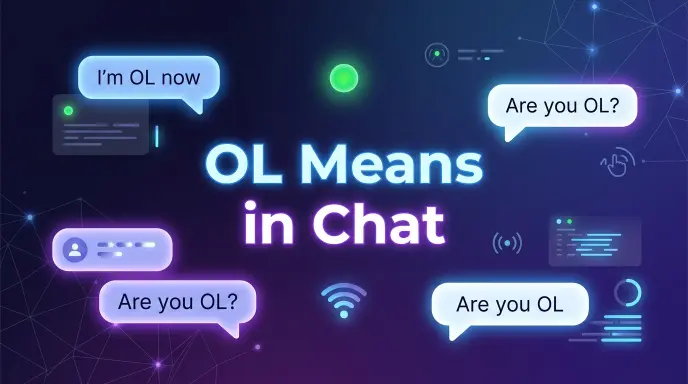
The term OL in chat is a short form that can have different meanings depending on context, but the most common one in online conversations is Online. People use it to quickly show that they are active or available on a messaging app or social media platform.
In everyday texting, OL = Online is used when someone wants to confirm they are present or connected. It is especially common in gaming chats, WhatsApp groups, and social media DMs where fast communication matters.
Example in chat:
Friend 1: Where are you?
Friend 2: I’m OL now.
Here, OL simply means the person is online and ready to talk.
In some rare cases, OL can also mean OverLoad in gaming or technical discussions, but this usage is not very common in casual texting. Another less frequent meaning is Old Lady or Old Love, but these depend heavily on context and are usually understood within specific groups.
Gaming example:
Player 1: Need backup
Player 2: I’m OL, coming now
Understanding slang like OL is important because it helps you respond quickly in fast-paced chats. It also avoids confusion when people use short forms instead of full sentences. In modern digital communication, abbreviations like OL make conversations faster, simpler, and more efficient, especially in mobile messaging and online communities.
How to Respond to This Term
Responding to “ol” depends on the mood. Here are different styles with examples:
Casual Response:
- Keep it light and match the vibe.
- Example:
- Friend: “You still got that ol bike?”
- You: “Yup, my ol ride’s still kicking!”
Funny Response:
- Add humor to keep it playful.
- Example:
- Friend: “That ol game you play is ancient!”
- You: “Hey, my ol game’s older than your jokes!”
Professional Response:
- Avoid slang and keep it polite.
- Example:
- Colleague: “You using that ol software?”
- You: “Yes, it’s still reliable for now.”
Privacy-Conscious Response:
- Stay vague if you don’t want to share.
- Example:
- Friend: “You still with that ol phone?”
- You: “Haha, something like that.”
Tip: Mirror the sender’s tone. If they’re joking, joke back. If they’re serious, keep it neutral.
O L Meaning in Chat
In online conversations, abbreviations and short forms are everywhere. One such term you may encounter is O L. Many people see it in text messages, social media chats, or even gaming platforms and wonder what it actually means.
The term O L usually stands for Online. It is a quick way to indicate that someone is active on a platform or available for chatting. For example, in WhatsApp or Messenger, if someone types I’m O L, it simply means I’m online right now.
Using abbreviations like O L helps save time and makes typing faster, especially when people are texting quickly or chatting in real-time. It is also common in gaming communities or forums where players want to update their status without typing full sentences.
Examples in Chat:
Friend 1: Are you free?
Friend 2: Yes, I’m O L, let’s talk
Gamer 1: Who’s O L?
Gamer 2: I am, ready to start the match.
The abbreviation is informal and is best used in casual conversations. It might not be understood by everyone, especially those unfamiliar with internet slang, so context matters.
Over time, O L has become a part of digital culture. It is one of many shorthand terms that make online communication faster, efficient, and fun. Understanding such abbreviations ensures you don’t miss important messages or misinterpret someone’s availability.
Regional or Cultural Differences
“Ol” is mainly an English slang term. It’s widely used in the U.S., U.K., Canada, and other English-speaking places. Its roots in informal dialects like AAVE or Southern U.S. English give it a cultural flavor, but it’s now global thanks to the internet.
Regional variations exist:
- In the U.S., “ol” is common in casual speech, especially in the South or urban areas.
- In the U.K., it’s less common but understood in online spaces.
- In Australia, terms like “old mate” are similar but more common.
Non-English cultures might not use it. In languages like Spanish or French, direct translations don’t exist, but similar slang (like “vieux” in French for “old”) might be used. It’s big in online English communities. Gamers, TikTokers, and Twitter users worldwide use “ol” in English posts, even if their first language differs.
Example:
- U.S.: “My ol car broke down again.”
- U.K.: “That’s an ol tune, mate.”
Comparison with Similar Terms
“Ol” vs. similar terms: Here’s a detailed comparison:
| Term | Meaning | Context | Formality | Example |
| Ol | Old, familiar, or outdated | Texting, gaming, casual | Informal | My ol phone’s still good. |
| Old-school | Retro, nostalgic | Music, fashion, gaming | Informal | That old-school rap slaps. |
| OG | Original, authentic | Respectful, often for people | Informal | She’s an OG in this crew. |
| Vintage | Old but valuable | Fashion, collectibles | Neutral | Got a vintage ol watch. |
| Ancient | Very old, often exaggerated | Joking, critical | Informal | That’s an ancient ol PC. |
Key differences:
- “Ol” is shorter and more versatile. It fits in quick texts.
- “OG” is about respect or authenticity. It’s not just about age.
- “Ancient” can sound negative. It implies something’s too old.
OL Slang Meaning
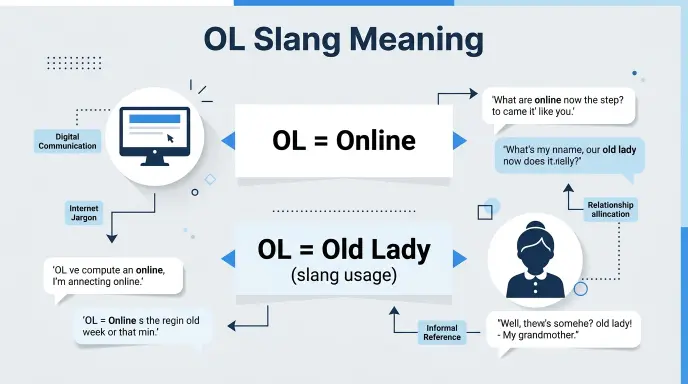
The term OL slang meaning is commonly seen in texting, social media, and online chats, and it usually stands for Old Lady or Online, depending on the context. Like many internet abbreviations, its meaning changes based on where and how it is used.
In most casual conversations, especially in gaming or chat platforms, OL = Online. It is used to show that a person is currently active on the internet or available to chat.
Example in chat:
Player 1: Where is John?
Player 2: He’s OL, join the lobby.
Here, OL simply means the person is online and active.
However, in some older slang or informal relationship contexts, OL can also mean Old Lady. This usage is less common today but may still appear in certain communities or casual talk, usually referring to a wife, girlfriend, or older woman in a humorous or informal way.
Example:
Friend 1: Who are you going out with?
Friend 2: My OL is waiting outside 😄
Because OL has multiple meanings, understanding the context is very important. In modern digital communication, the online meaning is far more widely used than any other interpretation.
Usage in Online Communities & Dating Apps
“Ol” is popular online. It’s used on platforms like Twitter, TikTok, Discord, and dating apps like Tinder to sound casual or nostalgic.
Twitter/TikTok:
- Users add “ol” to posts for humor or relatability.
- Example: “Just saw my ol crush on TikTok, lol.”
Gaming Communities:
- Common in Discord or Twitch chats to describe old games or players.
- Example:
- Gamer: “You play that ol RPG?”
- Reply: “Yeah, it’s an ol classic!”
Dating Apps:
- On Tinder, “ol” can make messages playful.
- Example:
- Match: “You still into that ol band?”
- You: “Heck yeah, my ol faves never die!”
Tips for responding:
- Keep it light and match their tone.
- Avoid overusing slang if the vibe feels formal.
- Example:
- Match: “Got any ol hobbies?”
- You: “Yup, still love my ol guitar jams!”
Hidden or Offensive Meanings
“Ol” is usually harmless. It’s a neutral term for “old,” but context matters. It can sound rude if used carelessly. For example, calling someone “that ol guy” in a negative tone might seem disrespectful, especially if they’re sensitive about age.
No hidden meanings. Unlike some slang, “ol” doesn’t have secret or offensive undertones. It’s just a casual shortcut. Tone matters. A friendly “my ol pal” is fine, but “that ol thing” about someone’s prized possession might upset them.
Example of misuse:
- Bad: “That ol teacher was so slow.” (Sounds mean.)
- Good: “My ol teacher was the best!” (Sounds warm.)
Be mindful of the setting. In professional or sensitive contexts, avoid “ol” to prevent sounding dismissive.
OL Meaning in WhatsApp Chat
In WhatsApp and other messaging apps, people often use short forms to save time. One such abbreviation you might see is OL. Many users wonder what it means, especially when it pops up in group chats or private messages.
Definition of OL
In most WhatsApp contexts, OL stands for Online. It indicates that someone is currently active on WhatsApp or another messaging platform. People may use it to inform others that they are available to chat or are checking messages.
For example:
Friend 1: Are you free?
Friend 2: Yes, OL now.
Here, Friend 2 is letting their friend know they are online and ready to chat.
Other Meanings
While OL usually means Online, in some contexts, it can have different interpretations like:
- Overload – Used when someone is overwhelmed or busy.
- Old Lady/Old Lad – Rare, usually in informal jokes.
Usage Tips
- Casual Chats: Perfect for group conversations or quick updates.
- Professional Chats: Avoid using OL in office chats; it can look too casual.
- Emoji Use: People often combine it with emojis to make the message friendlier, e.g., OL 😊.
Understanding OL helps you respond appropriately. If someone says they are OL, you can start a conversation immediately. In group chats, it can signal availability for a discussion or game session.
In short, OL is a quick way to say you’re online and ready to interact, making messaging faster and more efficient.
Suitability for Professional Communication
“Ol” is not suited for professional settings. It’s too informal for emails, reports, or workplace chats. Using it in a formal context might make you seem unprofessional or careless.
When to avoid it:
- In work emails: Stick to “old” or “previous.”
- In meetings: Use formal terms like “existing” or “prior.”
- Example:
- Unprofessional: “That ol system needs an update.”
- Professional: “The existing system needs an update.”
Alternatives for professional use:
- Previous: “The previous version worked well.”
- Existing: “Our existing tools are reliable.”
- Former: “The former manager approved it.”
Exception: If your workplace is very casual (like a startup), “ol” might be okay in team chats, but use it sparingly.
FAQs
1. What does “ol” mean in texting?
It’s a shorthand for “old,” used to describe something or someone familiar, outdated, or nostalgic.
2. Is “ol” rude?
Not usually, but it can sound rude if used negatively, like “that ol guy.” Context matters.
3. Can I use “ol” in professional emails?
No, it’s too informal. Use “old,” “previous,” or “existing” instead.
4. Where did “ol” come from?
It comes from informal English, like AAVE or Southern dialects, and grew popular in texting and online chats.
5. Is “ol” used outside the U.S.?
Yes, it’s common in English-speaking online spaces globally, but less so in non-English cultures.
6. How do I respond to “ol” in a text?
Match the tone casual, funny, or neutral. For example, “Yup, my ol phone’s still good!”
Conclusion
The term “OL” is a simple yet widely used abbreviation in digital communication. Standing for Online, it allows people to quickly indicate their availability without typing a full sentence.
You will often see it in texting, social media, forums, and gaming chats, helping friends, teammates, or followers know when someone is active.
Understanding OL is important because it improves communication efficiency and avoids confusion in fast-paced online interactions.
Unlike slang with multiple meanings, OL is straightforward and neutral, making it safe to use in most casual digital conversations.
By recognizing and using this abbreviation appropriately, you can stay connected with friends, participate in online communities, and respond in a timely manner.
If in chats, group conversations, or gaming sessions, knowing what OL means enhances your ability to communicate clearly in the online world.

Hi, I’m Nathaniel Carter your go-to source for fresh, trending, and unique text content. At TextTak.com, I curate ideas, inspiration, and engaging snippets that keep you ahead of the curve. If it’s witty messages, viral phrases, or creative text hacks, I make sure your words always stand out. Join me on this journey to make every message unforgettable.