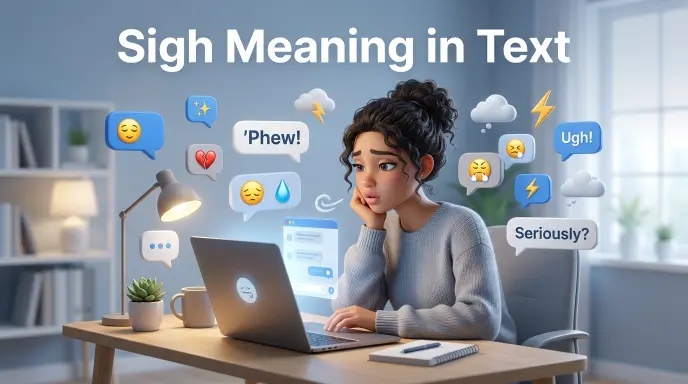
Text messages often include short words, symbols, and expressions that help people show emotions. One common expression is “sigh.”
When someone uses “sigh” in a text, they are usually trying to show a feeling that would normally be expressed with a real sigh in a face-to-face conversation.
The meaning of sigh in text can change depending on the situation. It may show frustration, disappointment, boredom, sadness, relief, or even exhaustion.
For example, if someone says, “Sigh, I still have so much work to do,” they are expressing that they feel tired or overwhelmed. In other cases, a sigh can simply show that a person is thinking deeply about something.
Understanding the meaning of “sigh” in text messages helps you better understand the emotions behind a conversation. It adds context and makes digital communication feel more natural and expressive.
Definition & Meaning
The word sigh comes from the real-life action of breathing out deeply. In text messages, it is written to represent that action and the emotion behind it.
Sigh meaning in text: A written expression used to show disappointment, frustration, sadness, exhaustion, relief, or mild annoyance.
People use it when they want to communicate a feeling without explaining everything.
Common Meanings of Sigh
- Disappointment
- Frustration
- Sadness
- Boredom
- Exhaustion
- Relief
- Resignation
Examples
Example 1: Disappointment
Person A: The concert was canceled.
Person B: Sigh, I was really looking forward to it.
Example 2: Frustration
Person A: The website crashed again.
Person B: Sigh, not again.
Example 3: Relief
Person A: Your package finally arrived.
Person B: Sigh, that’s a relief.
Variations
People may write it in different ways:
- Sigh
- sigh
- sigh
- Ugh, sigh
- Big sigh
These variations help show different levels of emotion.
Background & History
The word sigh has existed in the English language for centuries. Traditionally, it described the physical act of taking a deep breath and letting it out slowly.
In literature, writers used the word to show emotions such as sadness, love, regret, and relief. Characters in novels often sighed when facing emotional situations.
As digital communication became popular, people started writing actions instead of performing them. This led to expressions like:
- laughs
- shrugs
- facepalm
- sigh
During the early internet era, chat rooms and messaging services encouraged users to describe actions through text. Writing sigh became a quick way to communicate feelings.
Today, the term appears on:
- Text messages
- X (Twitter)
- Discord
- Gaming chats
The meaning has remained largely the same, but online users now employ it in more playful and sarcastic ways than before.
Usage in Various Contexts
Texting
People often use sigh to show disappointment or frustration.
Friend 1: I forgot my homework.
Friend 2: Sigh, that’s unfortunate.
Social Media
Users post sigh when reacting to news or events.
Example:
Sigh. Another rainy weekend.
Gaming
Gamers use it after mistakes or losses.
Player 1: We lost the match.
Player 2: Sigh, we were so close.
Casual Conversations
It may indicate boredom or annoyance.
Person A: The meeting got extended.
Person B: Sigh.
Romantic Conversations
Sometimes it shows affection or longing.
Person A: I miss you.
Person B: Sigh, me too.
Workplace Chats
It can express stress, though it should be used carefully.
Coworker: The deadline moved up.
You: Sigh, we’ll need to work faster.
Common Misconceptions & Clarifications
Many people assume sigh always means sadness. That is not true.
Misconception 1: Sigh Always Means Sad
Sometimes it expresses relief.
Example:
Sigh, thank goodness that’s over.
Misconception 2: It Is Always Negative
It can be neutral or even positive.
Example:
Sigh, vacation starts tomorrow.
Misconception 3: It Means Anger
While frustration can be involved, sigh usually indicates a milder emotion than anger.
Misconception 4: It Is Rude
Most of the time, it is not rude. However, sending only sigh can seem passive-aggressive depending on the situation.
Clarification
Always consider:
- Context
- Tone
- Relationship with the sender
- Conversation topic
These factors determine the intended meaning.
Similar Terms & Alternatives
Several expressions communicate emotions similar to sigh.
| Term | Meaning | Tone |
| Ugh | Frustration | Strong |
| Meh | Indifference | Neutral |
| Facepalm | Embarrassment | Humorous |
| Oh well | Acceptance | Calm |
| Seriously? | Annoyance | Direct |
| Smh | Disappointment | Casual |
| Yikes | Concern | Informal |
Examples
- Ugh, my phone died.
- Meh, I don’t care.
- Oh well, maybe next time.
Each alternative communicates a slightly different emotion.
How to Respond to This Term
Casual Response
Them: Sigh.
You: What’s wrong?
Supportive Response
Them: Sigh, today was exhausting.
You: I hope tomorrow is better.
Funny Response
Them: Sigh.
You: That sounded expensive.
Professional Response
Them: Sigh, another revision.
You: Let’s work through it together.
Privacy-Conscious Response
Them: Sigh.
You: You don’t have to share details if you don’t want to.
Empathetic Response
Them: Sigh, this week has been rough.
You: I’m sorry to hear that.
Regional or Cultural Differences
The word sigh is understood in many English-speaking countries.
United States
Common in texting and social media.
United Kingdom
Often used with dry humor and sarcasm.
Canada
Used similarly to American English.
Australia
Frequently appears in casual conversations and online discussions.
Non-English Communities
Many international users understand sigh because of internet culture and English influence.
Some languages use local equivalents that represent the same emotional expression.
Online Culture
Global platforms have helped spread the term worldwide, making it recognizable even among non-native English speakers.
Comparison with Similar Terms
| Expression | Emotion | Strength | Typical Use |
| Sigh | Disappointment or relief | Mild | General texting |
| Ugh | Frustration | Strong | Complaints |
| Meh | Indifference | Mild | Lack of interest |
| Smh | Disapproval | Medium | Social media |
| Facepalm | Embarrassment | Medium | Humorous situations |
| Oh well | Acceptance | Mild | Moving on |
Key Difference
Sigh is unique because it can express both negative and positive emotions depending on context.
Usage in Online Communities & Dating Apps
Dating Apps
On apps like Tinder, sigh may indicate:
- Frustration
- Playful teasing
- Romantic longing
Example:
Match: You still haven’t planned our coffee date.
Reply: Sigh, you’re right.
Social Media
Users often react to news with sigh.
Example:
Sigh. Another delayed flight.
Gaming Communities
Players use it after close losses.
Example:
Sigh, we almost won.
Discord and Reddit
The expression is frequently used in community discussions and reactions.
Tips for Responding
- Consider the context.
- Avoid assuming the sender is upset.
- Ask questions when unsure.
- Match the conversation tone.
Hidden or Offensive Meanings
Generally, sigh is not offensive.
However, tone can change how people interpret it.
Possible Negative Interpretations
- Passive aggression
- Sarcasm
- Dismissiveness
- Annoyance
Example
Boss: Please update the report.
Employee: Sigh.
This could seem disrespectful.
Context Matters
The same word can feel completely different depending on:
- Relationship
- Setting
- Timing
- Conversation topic
Most of the time, sigh simply reflects emotion rather than hostility.
Suitability for Professional Communication
Is Sigh Professional?
Usually, it is not ideal for formal business communication.
Why?
It may appear:
- Negative
- Unmotivated
- Passive-aggressive
Better Alternatives
Instead of:
Sigh, another task.
Use:
- Understood.
- I’ll handle it.
- Let’s review the requirements.
- Thanks for the update.
Acceptable Situations
In informal workplace chats among close colleagues, sigh may be acceptable. However, it should be used sparingly.
Professional Tip
When communicating with managers, clients, or customers, choose clear and positive language instead of emotional expressions.
FAQs:
What does sigh mean in a text message?
It usually expresses disappointment, frustration, sadness, relief, or mild annoyance.
Is sigh always negative?
No. It can also indicate relief or acceptance.
What does sigh mean with asterisks?
The asterisks represent an action, showing the person is pretending to sigh.
Is sigh rude?
Not usually, but it can sound rude if used sarcastically.
How should I respond to sigh?
Ask what is wrong, offer support, or respond according to the conversation tone.
Is sigh common on social media?
Yes. Many people use it when reacting to events, news, or personal situations.
Can sigh mean relief?
Yes. It often expresses relief after stress or uncertainty ends.
Conclusion:
The phrase sigh meaning in text refers to a written way of expressing emotions such as disappointment, frustration, sadness, boredom, relief, or acceptance. It comes from the real-life action of taking a deep breath and has become a common part of online communication.
People use it in text messages, social media posts, gaming chats, dating apps, and casual conversations to quickly share how they feel. While it is usually harmless, its meaning depends heavily on context and tone.
A simple sigh can signal frustration, but it can also show relief or playful annoyance. Understanding the situation helps you interpret it correctly and respond appropriately.
If you encounter it in a personal chat or an online community, recognizing the different meanings of sigh will help you communicate more effectively and avoid misunderstandings.

I am Jonathan Parker, creator of Texttak.com, where simple words create real impact. I focus on clear, trendy, and engaging content that connects with today’s audience.