
Have you ever received a message with the abbreviation VM and wondered what it means? In text messages, social media chats, and online conversations, VM can have different meanings depending on the context.
The most common meaning is “Voice Message“, which refers to an audio recording sent through messaging apps like WhatsApp, Messenger, or Instagram.
For example, someone might text, “I sent you a VM, please check it,“ meaning they have sent a voice message instead of typing a text. In some situations, VM may also stand for other phrases, but “Voice Message” is the meaning most people use in everyday digital communication.
Understanding text abbreviations like VM can help you communicate more easily online and avoid confusion. Since internet slang changes quickly, knowing the most common meanings ensures that you can follow conversations on social media, texting apps, and online communities without missing important information. In this guide, you’ll learn what VM means in text, how it is used, and examples of VM in real conversations.
Definition & Meaning
The short form VM has different meanings. The most common ones are:
1. Voicemail
This is the most popular meaning in texting.
Example:
- Friend: I left you a VM.
- You: Okay, I’ll check it.
Here, VM means a voice message left on your phone.
2. Virtual Machine
This meaning is used in tech or IT fields.
A virtual machine is a software-based computer system.
Example:
- Coworker: Run it on the VM.
- You: Got it.
3. Video Message
Sometimes people use VM for video messages.
Example:
- Friend: I sent you a VM on WhatsApp.
- You: Nice, I’ll watch it.
4. Voice Message
This is similar to voicemail but used in apps like WhatsApp.
Example:
- Friend: Check my VM.
- You: Listening now!
Key Point:
VM does not have one fixed meaning.
You must look at the situation to understand it.
VM Meaning in Chat

The term VM in chat can have different meanings depending on the context, but the most common meaning is Voice Message. In today’s fast-paced digital world, people often prefer sending voice notes instead of typing long texts. That’s why VM is widely used on apps like WhatsApp, Messenger, and Instagram.
For example:
Friend A: I’ll send you a VM.
Friend B: Okay, I’ll listen to it.
Here, VM clearly means a voice recording sent through chat. It saves time and allows people to express tone and emotion better than text.
However, VM can also mean Voicemail. This is more common in phone-related conversations.
Example:
Person A: I left you a VM.
Person B: I’ll check it later.
In some rare cases, especially in tech or gaming discussions, VM can stand for Virtual Machine. But this meaning is not common in everyday chatting.
So, the key point is that VM usually means Voice Message in casual chats, but you should always check the context to be sure.
VM Full Form in Text

The term VM is commonly used in texting, social media, and online conversations, but its meaning can change depending on context. In most digital communication situations, the full form of VM in text is Voice Message.
This is the most widely accepted meaning, especially on platforms like WhatsApp, Instagram, Messenger, and Snapchat.
A voice message (VM) is an audio recording sent instead of typing text. It allows users to speak and send their message quickly. This is useful when typing is slow, when the message is long, or when someone wants to express emotion more clearly.
For example, instead of writing a long paragraph, a user can simply send a VM saying what they want.
Example in Chat:
A: Can you explain it again?
B: I sent you a VM, listen to it.
However, VM can also have other meanings in different contexts. In technical or professional settings, VM may stand for Virtual Machine, which is a software-based computer system used in IT and programming. But in everyday texting conversations, this meaning is less common.
Why VM is Popular in Texting
- Saves time compared to typing
- Expresses tone and emotion better
- Easy for long explanations
- Convenient while multitasking
In modern communication, especially among young users, voice messages are becoming more popular because they feel more personal than text. That is why the abbreviation VM is widely understood as voice message in casual chats.
So, whenever you see VM in a conversation, always consider the context. In most cases, it simply means someone has sent you an audio message instead of writing text.
Whats A VM in Text
In text messages, VM most commonly stands for Voice Message or Voicemail. It is a popular abbreviation used when people want to refer to an audio message instead of typing a long text. With messaging apps like WhatsApp, Messenger, Instagram, and Telegram making voice communication easier, the term VM has become very common in everyday conversations.
For example, someone might say, I sent you a VM earlier, check it when you have time, meaning they sent a voice message. In another situation, a person could write, Leave me a VM if I don’t answer, which refers to leaving a voicemail. The exact meaning usually depends on the context of the conversation.
While Voice Message is the most widely used definition today, some online communities may use VM differently. Understanding the context helps avoid confusion. Since voice notes allow people to express emotions and details more clearly than text, VM has become an essential part of modern digital communication across social media platforms, messaging apps, and professional communication tools.
Background & History
The term VM became popular with the rise of mobile phones and the internet. In the early days, people used full words like voicemail. But as texting became faster, short forms became common.
In the 1990s and early 2000s, SMS messages had limits. People started using abbreviations like LOL, BRB, and VM. This helped save time and space.
Later, as smartphones grew, apps like WhatsApp and Messenger became popular. These apps introduced voice and video messages. So, VM started to mean voice message or video message too.
At the same time, in the tech world, VM already existed as virtual machine. This meaning is older and used in computing.
Today, VM is used in many ways:
- Casual chats
- Social media
- Work emails
- Gaming
Key Point:
The meaning of VM has grown over time. It now depends on where and how it is used.
VM Meaning in Text Message

The term VM in text messages usually stands for Voicemail. It is commonly used when someone wants to tell you they left a voice message or are asking you to check one. In today’s fast digital communication, people prefer short forms like VM to save time and keep messages quick.
For example:
Person A: Hey, I called you. Check your VM.
Person B: Okay, I’ll listen to it now.
Here, VM clearly means voicemail. It tells the other person that a recorded message is waiting for them.
Sometimes, VM can also have other meanings depending on context. In tech or online discussions, it may mean Virtual Machine. However, in normal texting and daily chats, Voicemail is the most common meaning.
Example (different context):
User A: My VM is not working.
This could mean a virtual machine if the conversation is about computers.
In casual conversations, VM is simple and useful. It helps people communicate quickly without typing full words. Still, it is important to understand the context so you don’t get confused.
Overall, VM is a short and practical term. Most of the time, if you see it in a message, it simply means Voicemail.
Usage in Various Contexts
1. Texting
People use VM for quick chats.
Example:
- A: Did you hear my VM?
- B: Not yet.
2. Social Media
Used in DMs or comments.
Example:
- A: Check the VM I sent.
- B: Watching now!
3. Gaming
Less common, but may appear.
Example:
- Player: Send VM for strategy.
- Teammate: Okay.
4. Professional Use
Mostly means virtual machine.
Example:
- Boss: Deploy it on VM.
- Employee: Done.
Key Point:
Always check the context before replying.
VM Meaning Text
In texting and online chats, you might come across the abbreviation VM. It is a common shorthand, but its meaning can vary depending on the context. Most often, VM stands for Voice Message. This is especially true on platforms like WhatsApp, Telegram, or Instagram, where sending short voice notes is faster than typing long texts.
For example:
Friend 1: I sent you a VM, check it out!
Friend 2: Got it, listening now.
Here, the conversation clearly shows that VM refers to a voice message. It is a quick and informal way to let someone know they have received a voice note.
However, VM can also mean Virtual Machine in professional or tech settings. For instance, in computer-related discussions or online gaming communities, someone might say:
Tech User: I set up a new VM on my server.
Colleague: Cool, is it running smoothly?
As you can see, the meaning depends on the environment and audience. In casual texting, it almost always refers to a voice message, whereas in technical discussions, it often relates to a virtual machine.
Understanding the context is crucial when responding. If someone texts VM sent, it’s safe to assume they are referring to a voice message. But in tech forums or professional chats, it’s better to clarify before assuming. Knowing these nuances helps prevent miscommunication and makes digital conversations smoother.
VM Mean in Text Slang
In text slang, VM most commonly stands for Voice Message. It refers to an audio recording that someone sends through messaging apps instead of typing a text message. Voice messages have become very popular because they allow people to communicate quickly and express emotions more clearly than written text. Apps like WhatsApp, Messenger, Telegram, and Instagram make it easy to send and receive voice messages with just a few taps.
For example, if a friend texts, I’ll send you a VM, they usually mean they will send an audio message explaining something. This can be useful when a person has a lot to say or does not want to type a long response. Voice messages are commonly used among friends, family members, coworkers, and even business contacts.
However, the meaning of VM can sometimes change depending on the context. In some situations, it may refer to Voicemail, especially when discussing phone calls. For instance, someone might say, Check your VM, meaning there is a voicemail waiting for you.
Because abbreviations often have multiple meanings, it is important to look at the conversation before deciding what VM means. In most modern texting and social media conversations, though, Voice Message is the most widely recognized meaning. Understanding this abbreviation can help you communicate more effectively and avoid confusion when chatting online.
VM Means in Chat
In online chatting and texting, people often use abbreviations to save time and make conversations faster. One of these common abbreviations is VM. But what does it mean?
VM can stand for Voice Message in most chat applications. A voice message is a short audio recording you send instead of typing text. It allows the other person to hear your tone, emotion, and intention directly, making communication feel more personal and natural. For example:
Friend 1: Hey, can you send me the details?
Friend 2: Sure, I’ll send a VM.
In this case, Friend 2 means they will record and send a voice message instead of typing it.
Sometimes, VM can also mean Virtual Meeting in professional contexts. For example, on platforms like Microsoft Teams or Zoom:
Colleague 1: Are you available for a VM tomorrow?
Colleague 2: Yes, let’s schedule it for 10 AM.
So, the meaning of VM depends on the context. In casual chats among friends, it usually refers to a voice message. In work or corporate settings, it often refers to a virtual meeting.
Understanding abbreviations like VM is important because they are widely used in texting, social media, and messaging apps. Using them correctly saves time and avoids confusion. Next time someone says send me a VM, you’ll know exactly whether they want a voice message or a quick virtual meeting.
Common Misconceptions & Clarifications
Many people think VM has only one meaning. This is not true.
Misconception 1:
VM always means voicemail.
Truth: It can also mean voice message or virtual machine.
Misconception 2:
VM is only for casual chats.
Truth: It is also used in professional settings.
Misconception 3:
It is always clear.
Truth: It can be confusing without context.
Key Point:
Ask if you are unsure.
Example:
- You: Do you mean voicemail or voice message?
Similar Terms & Alternatives
| Term | Meaning | Use |
| VM | Voicemail / Voice message | General |
| DM | Direct message | Social media |
| PM | Private message | Forums |
| Audio msg | Voice message | Apps |
| Vid msg | Video message | Casual |
Simple Alternatives:
- Voice note
- Audio message
- Call recording
VM Full Form in Chat

In online conversations and messaging apps, the abbreviation VM is often used. Understanding what it means can help you respond appropriately and avoid confusion.
The most common full form of VM in chat is Voice Message. This is widely used on platforms like WhatsApp, Messenger, Telegram, and other messaging apps. When someone types I sent you a VM or Check my VM, they are asking you to listen to the voice note they recorded instead of reading a text message.
Why Use VM in Chats?
Voice messages are faster and more personal than typing long texts. They allow people to convey tone, emotion, and urgency more clearly. For example, a VM can make a friendly joke sound more lively or express concern in a serious situation better than plain text.
Example Usage:
Friend 1: Hey, I couldn’t explain everything in text, so I sent you a VM.
Friend 2: Okay, I’ll listen to it now.
Other Contexts
In some professional or technical settings, VM can also mean Virtual Machine, but in casual chat, it almost always refers to Voice Message.
Understanding this term is essential for modern digital communication. It saves time and helps you interact naturally, especially in busy chats or group conversations, where listening to a VM can convey more than a long paragraph of text.
So, next time you see VM in a chat, you’ll know it usually means Voice Message and not something more complicated.
What is VM in Chat

In modern online communication, you may often see the term VM in chats, social media, or gaming platforms. But what does it actually mean? VM stands for Voice Message.
It is a quick and convenient way to communicate when typing a long message is not ideal or possible. Instead of sending text, you record your voice and send it directly to the other person.
Voice messages are popular because they convey tone and emotion much better than text. For example, a simple I’m fine text may seem neutral, but a voice message can show happiness, excitement, or concern through your tone.
VMs are widely used on platforms like WhatsApp, Instagram, Messenger, and Discord. Gamers also use them to give instructions or communicate quickly during gameplay. They are especially useful when you’re multitasking or on the move, as recording a VM takes less effort than typing.
Here’s an example of a VM conversation:
Friend 1: Can you explain the homework? (sends text)
Friend 2: Sure, I’ll send you a VM. (records a 30-second voice message explaining the homework)
It is important to remember that VM messages are more personal than text. They are often seen as warmer and more engaging. However, they may not always be suitable in professional contexts unless explicitly allowed.
In summary, VM in chat refers to sending a voice message instead of text. It is practical, expressive, and increasingly common in digital communication, bridging the gap between typed words and face-to-face conversation.
How to Respond to This Term
Casual Response
- I’ll check it.
- Listening now!
Funny Response
- Hope it’s not too long 😄
- Did you sing in it?
Professional Response
- I will review the VM shortly.
- Received your VM.
Privacy-Conscious Response
- Can you text instead?
- I can’t listen right now.
VM Meaning Texting
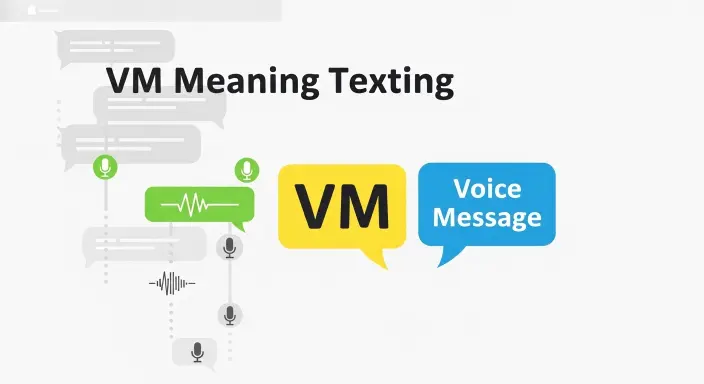
In texting and online conversations, you might come across the abbreviation VM. But what does it really mean? In most cases, VM stands for Voice Message. It is a popular shorthand used in apps like WhatsApp, Telegram, Messenger, and other messaging platforms.
Instead of typing a long message, people often send a VM to convey tone, emotion, or detailed information more effectively.
Using a VM can make communication faster and more personal. For example, if a friend asks about your day, instead of typing a long reply, you might record a voice message saying:
Friend: Hey, what are you doing?
You: Sends a VM Just finished work! It was a hectic day, but I’m relaxing now.
The term VM is also sometimes used in professional settings, particularly in remote work, where colleagues might send a voice update rather than a written one.
Other Meanings in Context
While Voice Message is the most common, VM can occasionally mean Virtual Machine in tech discussions, or even Voicemail in phone communications. This makes context very important.
Why People Prefer VMs
- Tone clarity: Voice conveys emotion better than text.
- Efficiency: Saves time typing long messages.
- Personal touch: Makes interactions feel more real and connected.
So, whenever you see VM in texting, think about the context it is most likely someone wants to send you a voice message rather than type it out.
Regional or Cultural Differences
VM is used worldwide, but not everyone uses it the same way.
In English-speaking countries, it often means voicemail.
In tech communities, it mostly means virtual machine.
In some regions, people prefer full words like:
- Voice note
- Audio
In South Asia, including Pakistan, people mix English and local language. So VM is used but not always clearly.
VM Stands for in Chat

In online chatting, social media, and gaming conversations, the term VM is commonly used, but its meaning can change depending on the platform and context. The most popular meaning of VM in chat is Voice Message.
This refers to an audio recording that a person sends instead of typing text. Voice messages are widely used on apps like WhatsApp, Instagram, Snapchat, and Messenger because they are faster and more personal than written messages.
For example, instead of typing a long explanation, someone might say:
A: I’ll send you a VM explaining everything.
B: Okay, send it!
However, in some contexts, VM can also stand for Video Message, although this is less common. In professional or technical environments, VM may even mean Virtual Machine, but in casual texting, this meaning is rarely used.
Voice messages (VMs) are popular because they allow people to express tone, emotion, and clarity that text sometimes cannot deliver. For instance, sarcasm, excitement, or concern can be easily understood in voice form. This makes communication more natural and expressive.
Example in daily chat:
A: Why didn’t you reply?
B: Sorry, I sent you a VM explaining everything 😅
In short, when someone says send me a VM in chat, they usually mean a voice message, not anything technical or formal. Understanding this slang helps avoid confusion in online conversations and makes digital communication smoother and more natural.
Comparison with Similar Terms
| Term | Meaning | Context |
| VM | Multiple meanings | General |
| Voicemail | Phone message | Calls |
| Voice note | App audio | |
| Virtual machine | Computer system | Tech |
Key Difference:
VM is flexible, others are specific.
What Does VM Stand for in Texting

In texting and online conversations, VM is a short form that can have different meanings depending on the context. The most common meaning is Voice Mail, but in modern internet slang, it can also refer to Voice Message or even Virtual Machine in technical chats.
However, in everyday texting between friends, the meaning is usually simple and related to communication.
When someone says Check my VM, they are most likely talking about a voice message or voicemail they have sent or received. This is very common on apps like WhatsApp, Instagram, Snapchat, and Messenger, where users often send voice notes instead of typing long messages.
Example in Chat:
A: Did you see my VM?
B: Yes, I listened to your voice message!
In another context, especially in tech or gaming discussions, VM can mean Virtual Machine, which is a software-based computer system used by developers. But this meaning is not common in casual texting.
Why VM is Used
People prefer VM or voice messages because:
- It is faster than typing
- It feels more personal
- It expresses emotion better
So, in simple terms, VM in texting usually means a voice message or voicemail, and its meaning changes slightly depending on where it is used.
Usage in Online Communities & Dating Apps
On apps like Tinder or Instagram, VM usually means voice message.
Example:
- A: Send a VM.
- B: Okay, here it is.
In gaming chats, it may mean voice communication.
Tips:
- Be polite
- Don’t send long messages
- Ask before sending
Hidden or Offensive Meanings
VM is generally safe. It has no offensive meaning in most cases.
However, confusion can happen if used wrongly.
Example:
In work chat, using VM casually may look unprofessional.
Key Point:
Tone and context matter.
Suitability for Professional Communication
In professional settings, VM is okay only if clear.
Better to use full words like:
- Voicemail
- Virtual machine
Example:
Instead of:
- Check VM
Say:
- Please check the voicemail.
FAQs:
1. What does VM mean in texting?
It usually means voicemail or voice message.
2. What does VM mean in tech?
It means virtual machine.
3. Is VM formal?
Not always. Use full words in formal settings.
4. Can VM be confusing?
Yes, because it has many meanings.
5. Should I use VM in work emails?
Better to avoid it.
6. Does VM mean video message?
Sometimes, but not always.
Conclusion:
VM most commonly stands for “Voice Message” in text conversations, social media chats, and messaging apps. It allows people to communicate quickly without typing long messages, making conversations feel more personal and natural.
In some situations, VM can also mean “Voicemail,” especially when discussing phone calls. The exact meaning depends on the context of the conversation.
As digital communication continues to evolve, abbreviations like VM help users save time while staying connected. Understanding what VM means can prevent confusion and improve your online communication skills.
If someone sends you “VM,” simply look at the surrounding conversation to determine whether they are referring to a voice message, voicemail, or another less common meaning.
Knowing common chat abbreviations like VM makes texting, social media interactions, and online conversations easier to understand and more enjoyable.

I am Jonathan Parker, creator of Texttak.com, where simple words create real impact. I focus on clear, trendy, and engaging content that connects with today’s audience.